
“I’ve worked in the tech industry for the last 10 years, and Exponential View has guided me and helped me think much larger than I otherwise would have.” — Nicky B., a paying member
Hi all,
Welcome to the Sunday edition #605.
If you’re catching up this weekend, we covered a lot of ground on AI adoption, long-term knowledge impact, agent economics, and chip innovation during the week. If you missed anything, we’ve gathered this week’s Exponential View and AI Investment Brief readings at the end.
Enjoy!
A MESSAGE FROM OUR SPONSOR
Granola unlocked today’s post for you.
We use Granola to capture our meetings. See it in action in the notes from our latest AI Investment Brief members’ call. Join EV as an annual member and get four months of Granola Business for free, with 10 seats for your team.

Math 2.0
When OpenAI released its repo with hundreds of mathematical manuscripts and supporting proofs, I asked what it might mean for the future of human knowledge:
Problems that have stumped the best human minds for decades fell to one afternoon of compute. […] Back in 1794, Condorcet bet that knowledge and our capacity to spread it and share it would evolve together. He has been right for nearly three hundred years. Now they might be coming apart, but not because of the intrinsic nature of these discoveries. We could bring them together if we insist our AI systems provide explanations, not merely proofs.
If we don’t, we’ll have more answers and less understanding.
A new group calling itself the Association for Human Mathematics criticized the release and called on mathematicians to stop working with OpenAI. Here I tend to agree with Rohit Krishnan that there isn’t a “way to unring the bell, nor do I think we would ever go back to the old ways of doing maths.”
Terence Tao is pragmatic in his vision for Math 2.0:
“Math 1.0” placed a premium on being the first to solve an open problem, even if the solution was not initially well understood. Now that this goal has been optimized to the point of unsustainability, “Math 2.0” will need to decenter the role of raw problem solving and value mathematical progress more holistically - for instance by elevating the role of exposition, but also that of community building and opening up new directions of study. I believe that AI can contribute positively in all of these directions as well; but it will require more imagination and ambition…
The transition is hitting the field hard; after all, an open problem can organize years of training and collaboration at institutions. In a seminar this week, Fields medallist Hugo Duminil-Copin says his PhD students and postdocs were “in a state of total panic”. Like Tao, he calls for community-building — working with colleagues and students to understand the results, organizing conferences, and writing explanations for a wider community.
See also:
In cryptocurrency circles, Justin Drake urges preparation for “bunker mode,” warning that AI could undermine the digital signatures that authorize transactions before quantum computers do; Meltem Demirors calls it a “sobering moment” for the industry.
An independent researcher used AI coding tools to investigate a possible new planet. Amateurs have contributed to astronomy before AI, but with new tools, they might take on more research, while experts focus on even bigger, currently dormant problems.


Nathan Benaich’s State of AI Report 2026 is out – it’s an important reference, worth your time.
McKinsey has a useful systems view of the AI economy.
More than chips
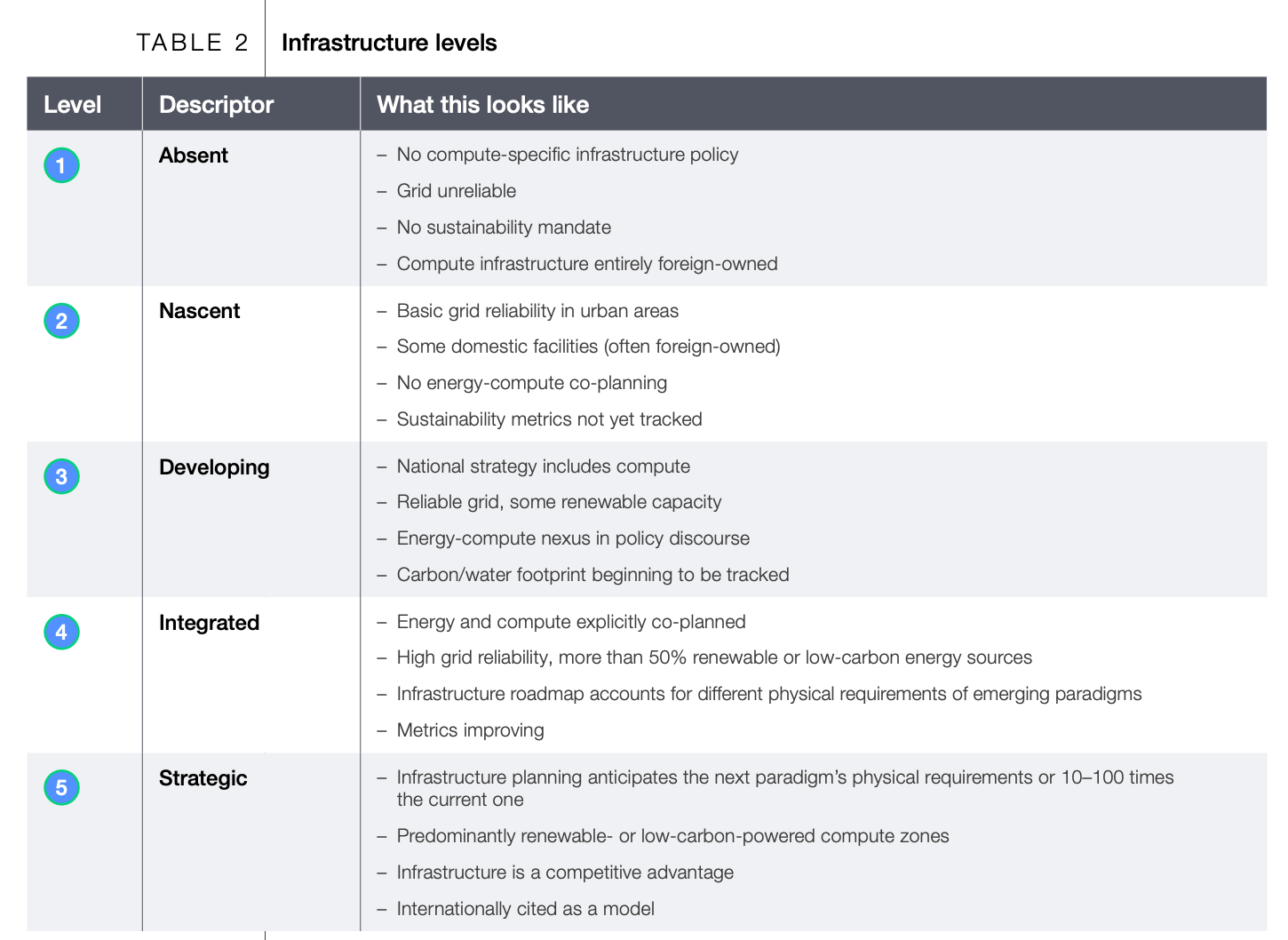
I worked with the WEF1 to release The Next-Generation Computing Framework this week. Compute is a condition of economic participation and strategic infrastructure. For me, that puts some practical questions ahead of the excitement for governments and firms, including:
Sovereignty needs a practical test. A country can own its data centers and still depend on a foreign supplier for anything from maintenance to licensing. We can no longer assume peacetime. We recommend testing agency in the supply chain, “stress-testing whether autonomy actually exists in moments of crisis, rather than relying on peacetime assumptions of access,” to understand what happens when those suppliers become unavailable.
Next-generation computing needs an energy plan. Quantum computing still depends on conventional computers for control, error correction, and processing results. They will likely sit alongside existing infrastructure, potentially increasing total electricity demand.
Find the constraint before spending more on compute. Our framework treats electricity, data, or skills constraints as potential limits on what other investments can achieve. More computing capacity may have limited value if people cannot put it to work — so we advise solving the constraints before spending more on compute.
Pakistan, electrified
We’ve followed Pakistan’s rooftop solar revolution since 2024, and in March examined how it was cushioning the country against imported-fuel shocks with the Strait of Hormuz closing.
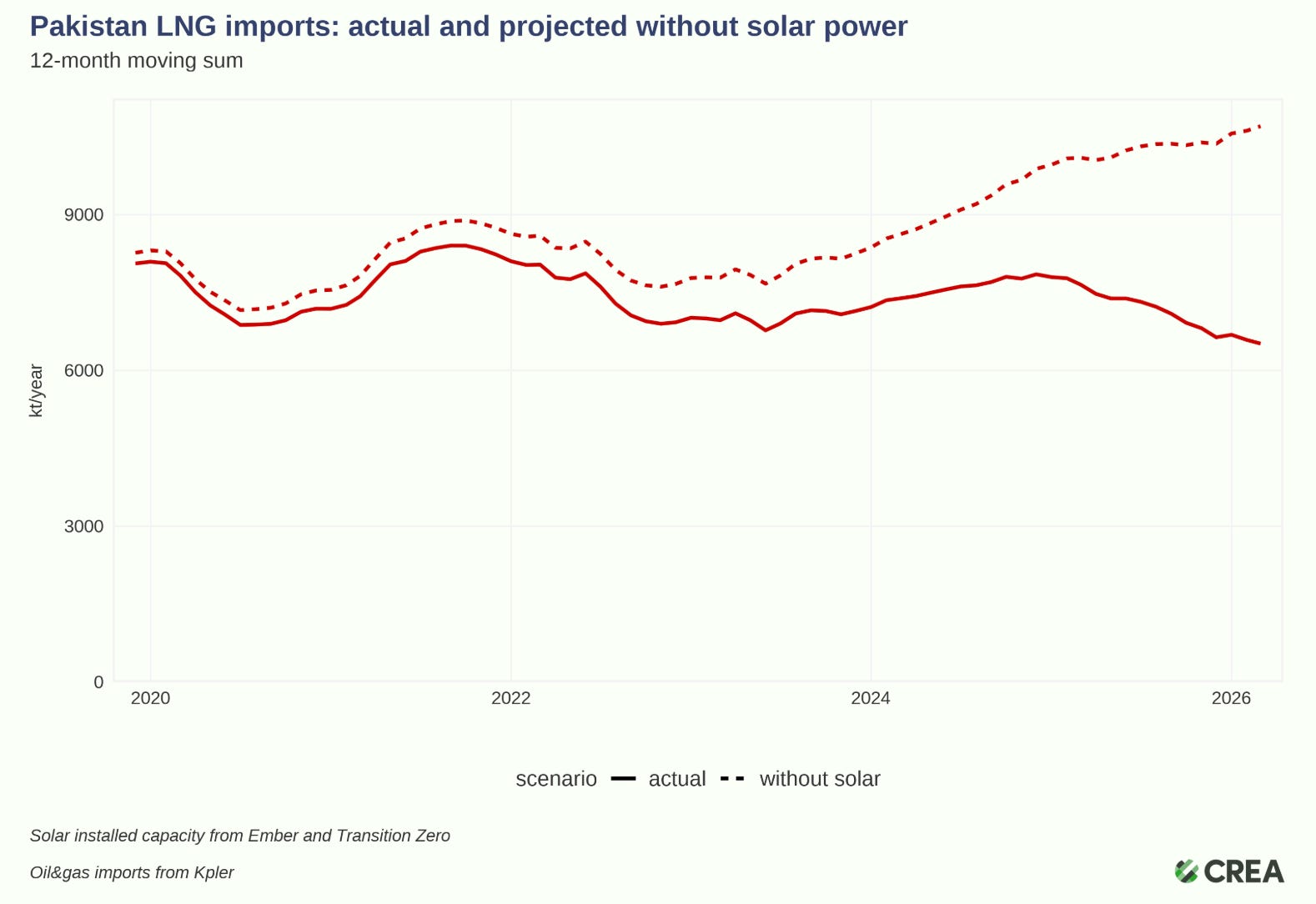
Now high fuel prices could accelerate another change for Pakistan. The government targeted 30% of all new vehicle sales to be electric by 2030. This week, government adviser Haroon Akhtar told Bloomberg that higher petrol prices could bring that target forward.
The transition in developing nations, however, remains “chaotic and unequal,” as Jan Rosenow points out. The grid’s costs don’t disappear when customers buy less electricity. If those fixed costs are recovered through higher electricity prices, households that can’t afford panels may get higher bills. A cheaper alternative for some can make the shared system more expensive for others.
See also:
Energy researcher Seaver Wang argues that a bipartisan permitting deal could substantially benefit clean energy even if it also helps fossil-fuel projects. About 85% of the generation and storage capacity awaiting US grid connections is solar, wind, or batteries.
Short morsels to appear smart at dinner parties
Why are personal agents taking off in the US, but not in China? Grace Shao points at China’s mobile superapp ecosystem.
In a retrospective study of over 54,000 women, AI picked up a rising cancer risk signal years before diagnosis.
🔋😎 A review of 157 experimental studies finds that retired batteries can still have much to give. Of more than 10,000 retired cells, median remaining capacity was 84.5%.
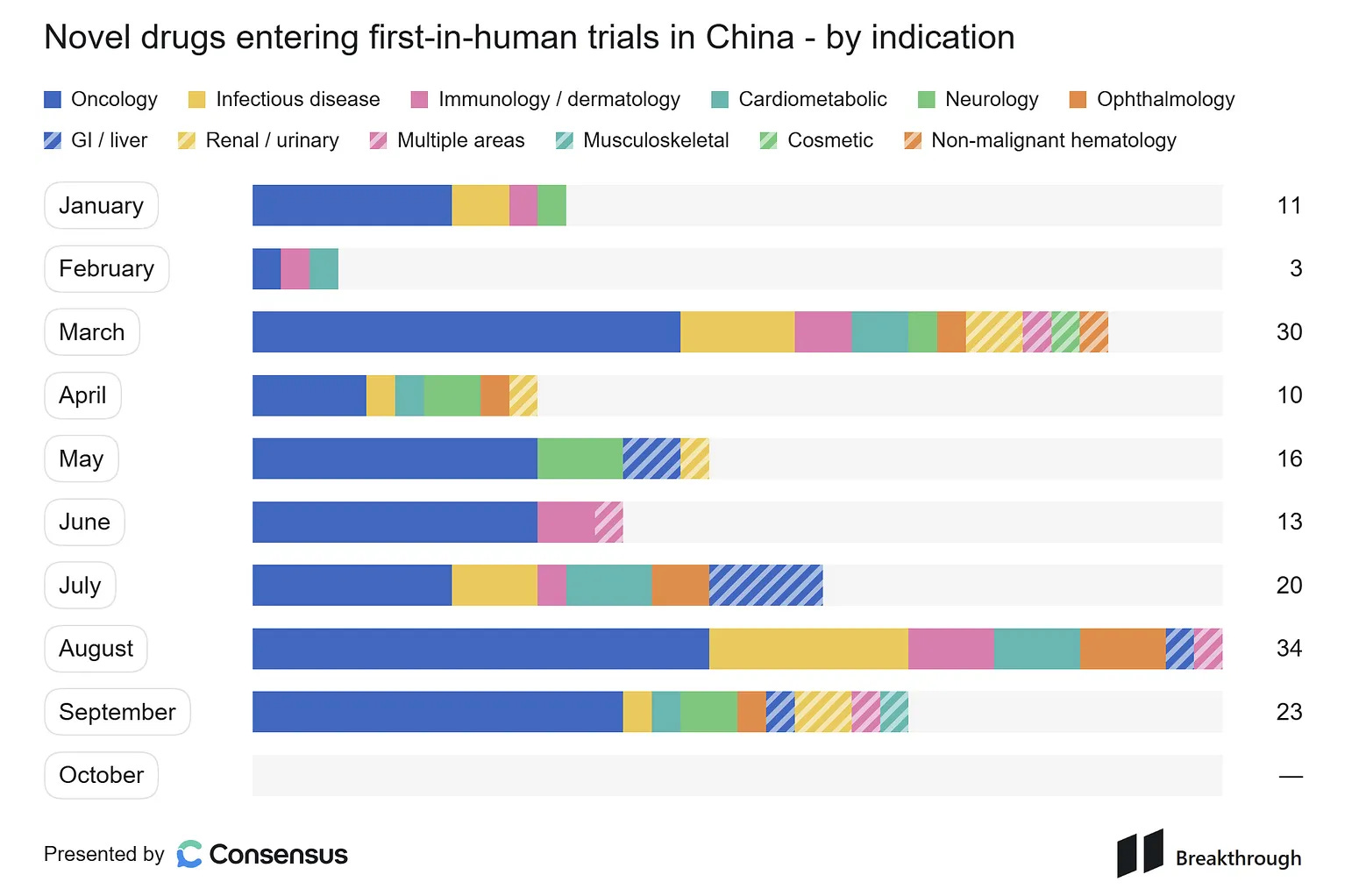
Samuel Hume has cataloged 160 new drug programs cleared to begin human trials in China this year.
🧱 Researchers created a semi-autonomous AI system that can build new materials atom by atom.
A Canadian startup is deploying permafrost blankets in the Arctic.
🎩 Victorian Britain’s ruling class was successful despite living what, to us, may look like a frivolous life. An amusing read.
A new typeface inspired by Michelangelo’s manuscripts is coming to Word.
AI can take binary files of two games and fuse them together – think Super Mario running around Dark Souls.
The latest from our team:
In Exponential View:
More AI, more justice? — Can AI help people navigate the legal system without a lawyer?
What is left to do — What happens when machines make discoveries faster than we can understand them?
The end of screen time — Nathan Warren left his laptop behind and discovered how much work he can do by talking to AI.
In AI Investment Brief, we examined:
AI revenues at $276bn annualized — Our updated accounting of the money coming into AI.
Economic agents — What would it cost to run a persistent personal AI assistant?
High-bandwidth flash — A proposed memory design that could help AI chips do more work.
Thanks for reading!

I am a co-chair of the Global Future Council on Next Generation Computing.