Hi all,
Over the past year, we reviewed thousands of data points on AI and exponential technologies to identify the signals that mattered most. Across almost 50 editions of Monday Data, we shared ~450 insights to start each week.
Today, we’ve distilled them into 25 numbers that defined the year, across five themes:
The state of intelligence
The state of work
The state of infrastructure
The state of capital
The state of society
If you enjoy today’s survey, send it to a friend.
Let’s jump in!
Intelligence got cheaper, faster and more open
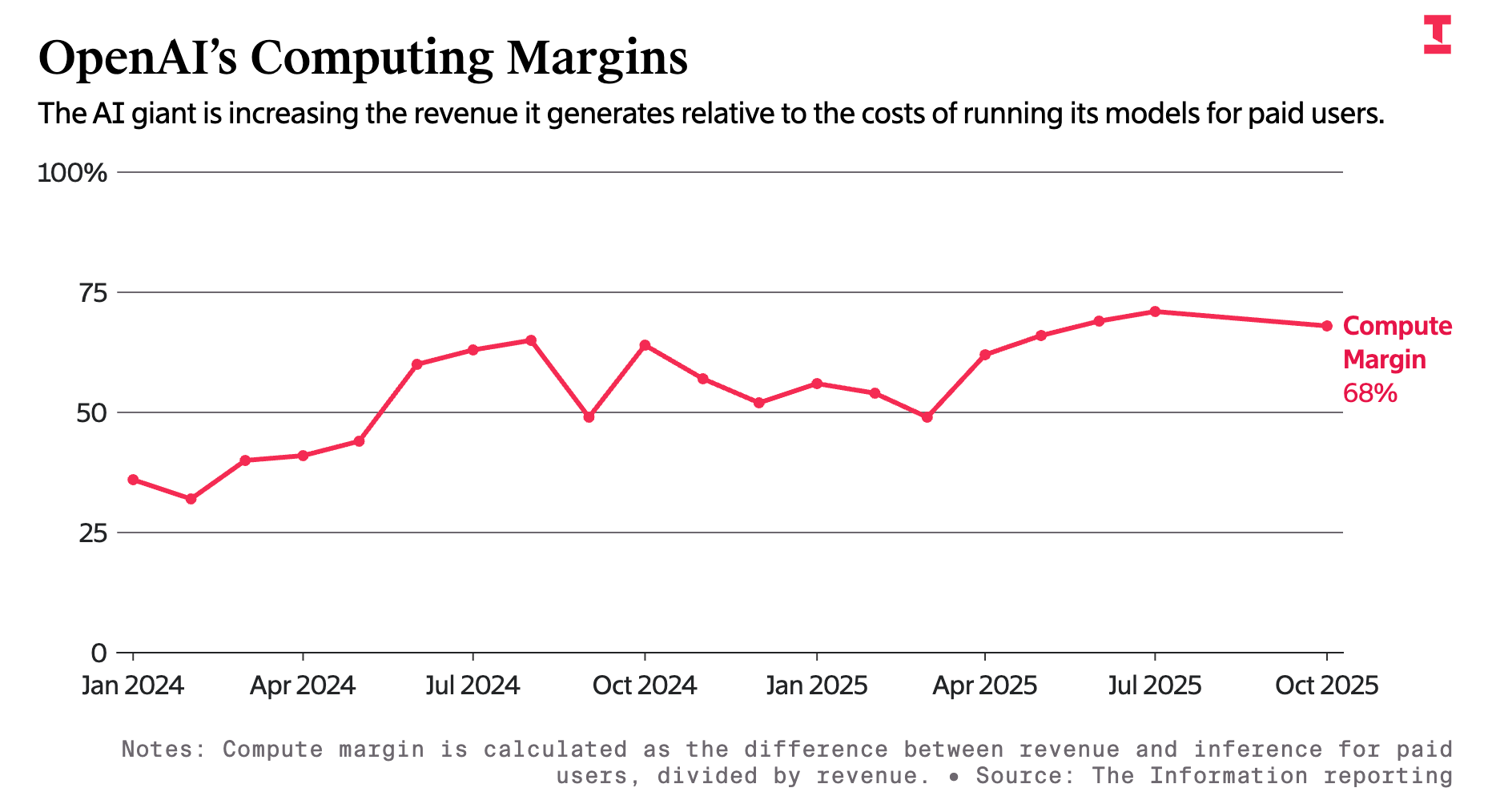
Margin gains. OpenAI’s compute profit margin – revenue after deducting model operation costs – reached 68% in October 2025, roughly doubling from January 2024 (36%) as efficiency improved.
Demand curve. Following the Gemini 3 release, Google has been processing more than 1 trillion tokens per day. Moreover, token output at both Alibaba and OpenRouter has been doubling every 2-3 months.
Open beats on price. Shifting from closed models to open models was estimated to reduce average prices by over 70%, representing an estimated $24.8 billion in consumer savings across 2025 when extrapolated to the total addressable market.
Trust gap. Twice as many Chinese citizens (83%) trust that AI systems serve the best interests of society as Americans (37.5%).
Where it’s used most. AI usage is clustered in service-based economies – with UAE (59.4%) and Singapore (58.6%) in the lead; the US ranks ~23rd.
Work reorganized around AI
Near universal adoption. Close to 90% of organizations now use AI in at least one business function, according to McKinsey.
Time saved. ChatGPT Enterprise users report 40-60 minutes of saved time per day thanks to AI use. Data science, engineering and communications workers save more than average at 60-80 minutes per day.
Hiring tilts to AI. Overall job postings for the whole labor market dropped ~8% YoY1, but AI roles are on the rise. Machine learning engineer postings grew almost 40%.
Automation pressure. In areas with autonomous taxis, human drivers’ pay has fallen. Down 6.9% in San Francisco and 4.7% in Los Angeles year-on-year.
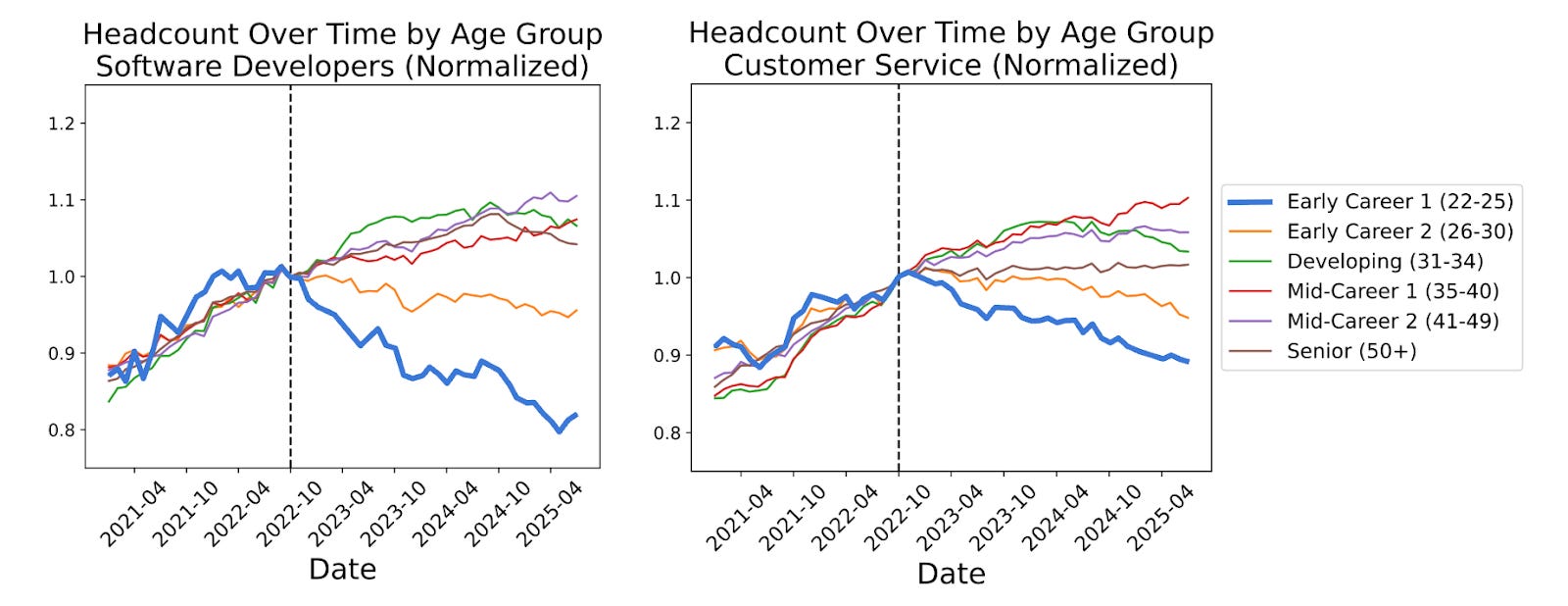
Early-career squeeze. Early-career workers between 22-25 in the most AI-exposed occupations (including software developers) saw a 16% relative decline in employment since late 2022.2