
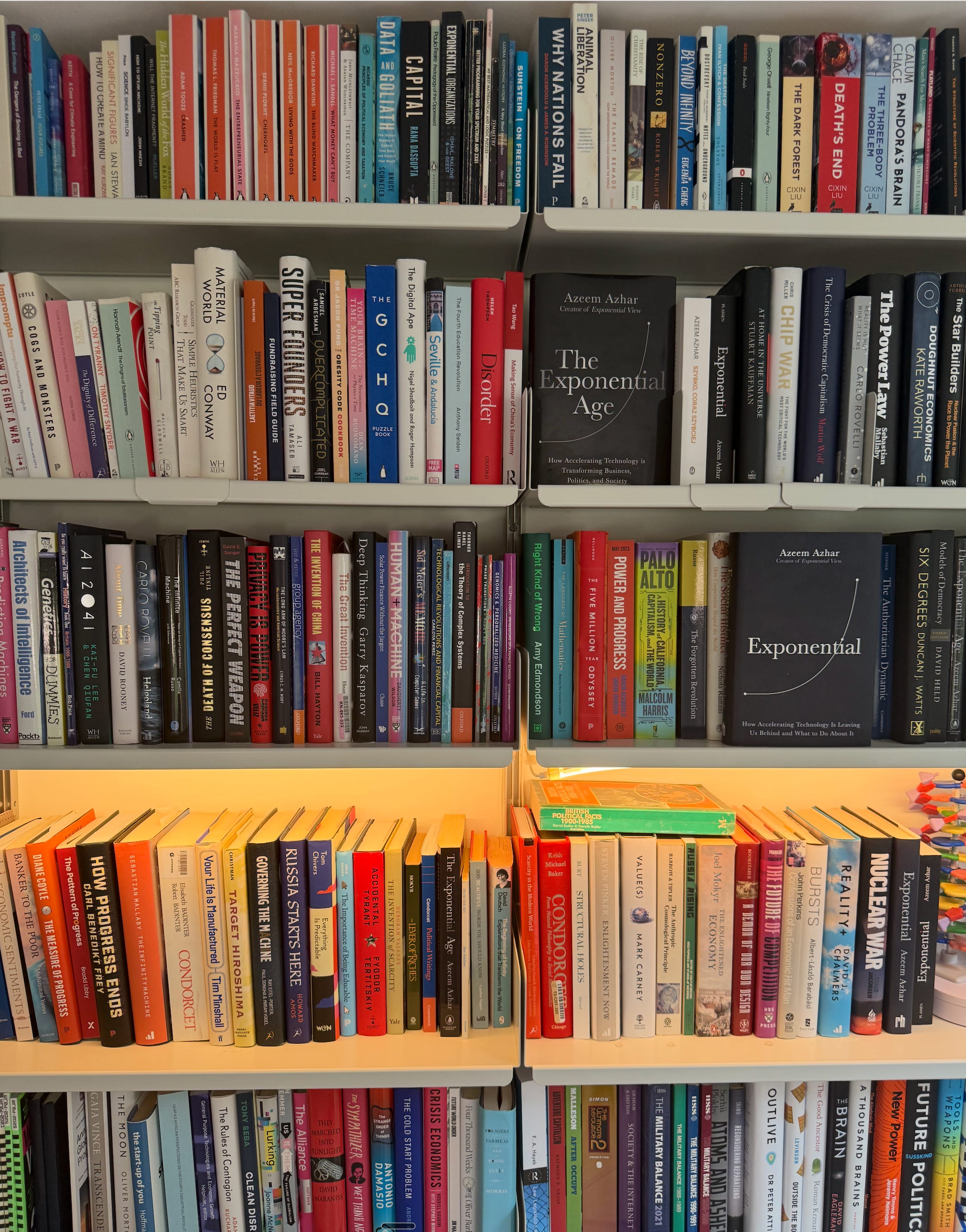
Readers often ask me what books are on the bookshelf you see behind me in my videos.
One of the surprising effects of working with AI is that I spend much more time reading long-form, books and journal articles in particular. More than before, I appreciate a book as a complete thing, an idea held together by an author, chewed over, possibly for years, and presented in a new way.
There are over 350 titles on the bookshelf in my study. The oldest one is a 231-year-old first edition. The newest is likely an advance reader copy of something I have been sent. As I’ve been working on my new book this year, I’ve really been focused on reading things relevant to that, and I haven’t read as broadly as I normally would.
I do want to share some suggestions of things you might want to read over the final month of summer while trying to be a little bit non-obvious, focusing on older titles or the left field.
As a side note, I’m wildly impressed by how well-read Exponential View readers are from what you share in the community Slack (join if you’re a member on the annual plan) and when we meet in person.
Here you go:
FICTION
Perfection by Vincenzo Latronico
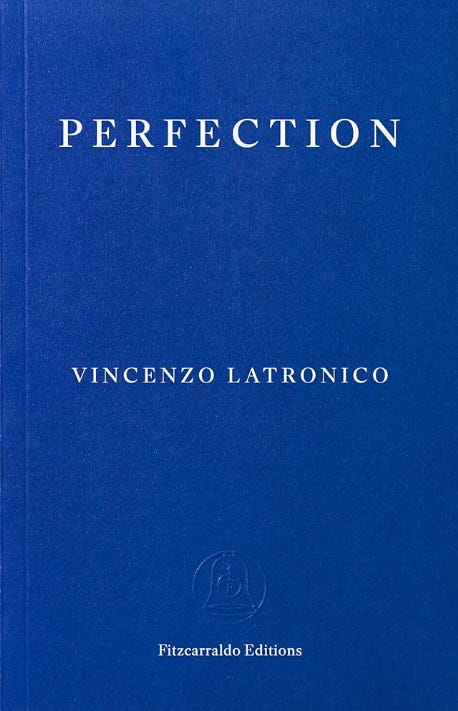
Vincenzo Latronico’s Perfection looks at the meticulously curated life of a pair of digital nomads currently holed up in Berlin. The reality isn’t the Instagram feed. Perfection is my top choice.
I Do Know Some Things by Richard Siken
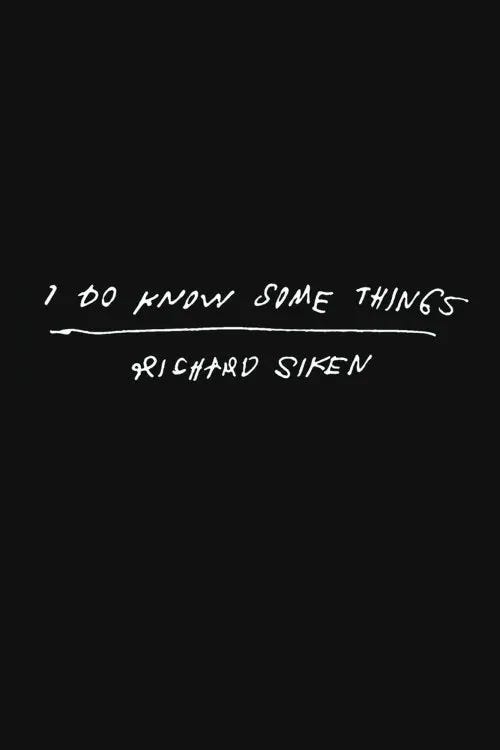
I don’t read much poetry. But I turned to Richard Siken’s latest collection in an attempt to learn. He wrote I Do Know Some Things after suffering a stroke that wrecked his language skills. It takes you through his journey of relearning who he is. It is prose as poetry, flat and unrelenting.
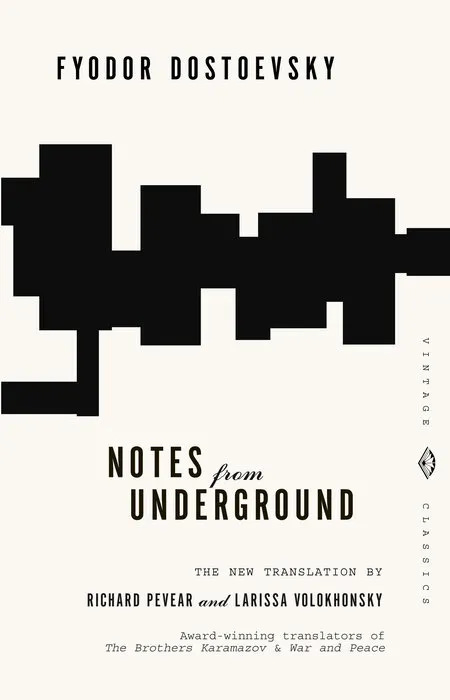
Notes from Underground by Fyodor Dostoevsky
I’ve also really fallen back into Russian literature for the first time in decades.
Dostoevsky’s Notes from Underground is just a standing rebuke to anyone who thinks humans make great decisions. It’s the protagonist standing tall against every version of utopia.
Fathers and Sons by Ivan Turgenev
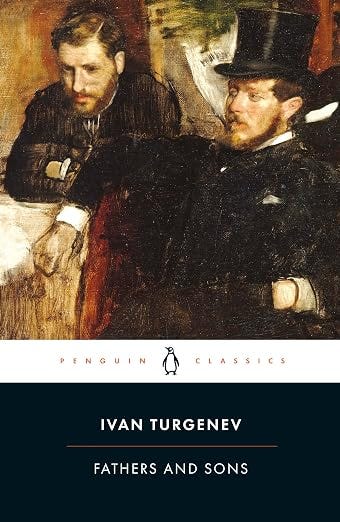
Scientific nihilism clashes with romantic liberalism in Turgenev’s novel. This is a tale of generational disruption and of what even disruptors can’t remove. I dropped my copy in the swimming pool.