
There’s a flood of AI content coming down the pipeline across all forms of media. Music, images, LinkedIn posts, longform, and book summaries. As AI output grows, the question becomes: what does a future coexistence with AI-generated content look like?
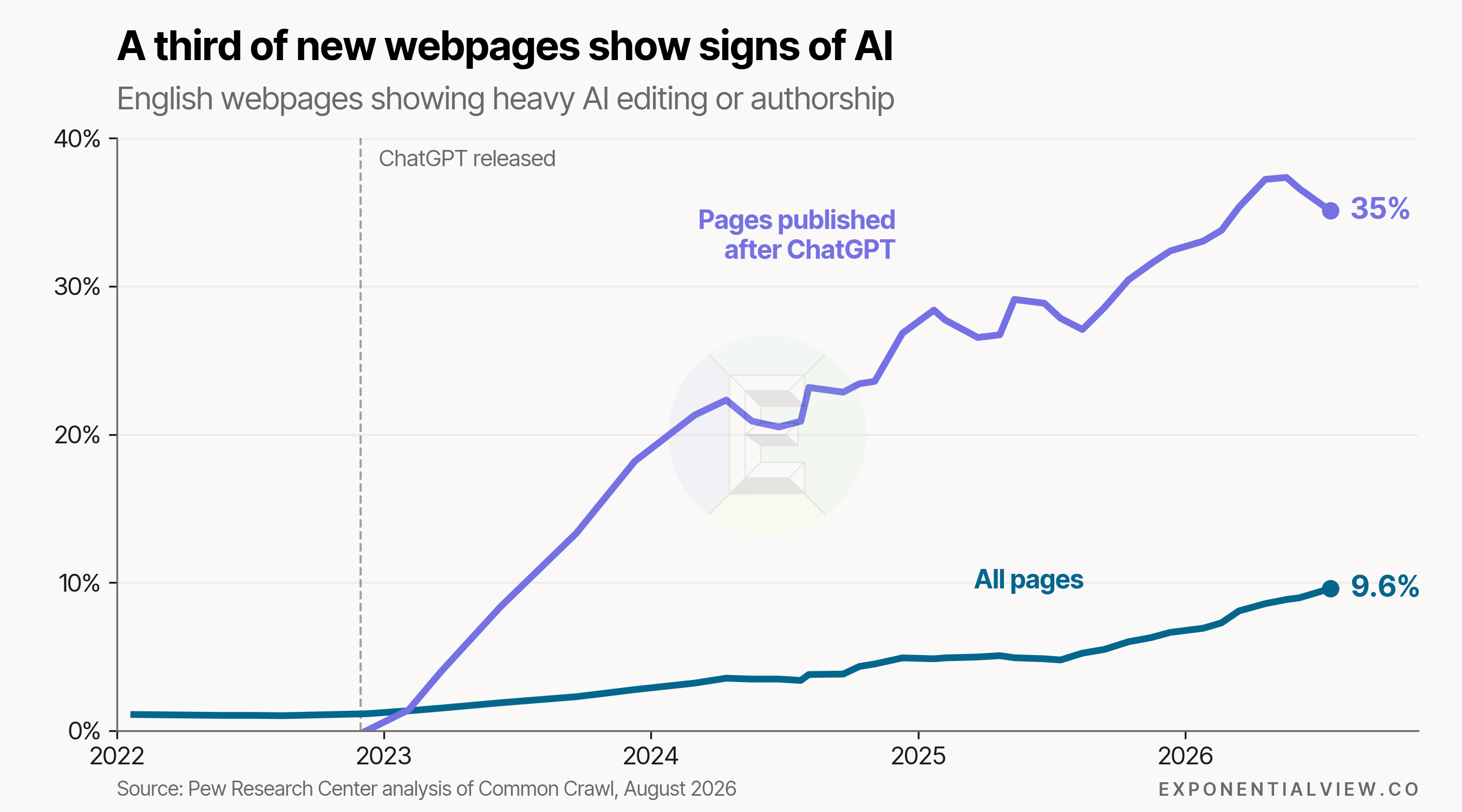
The growth of websites made by AI has been noticeable since 2023. Now every third webpage created has some part attributable to AI.
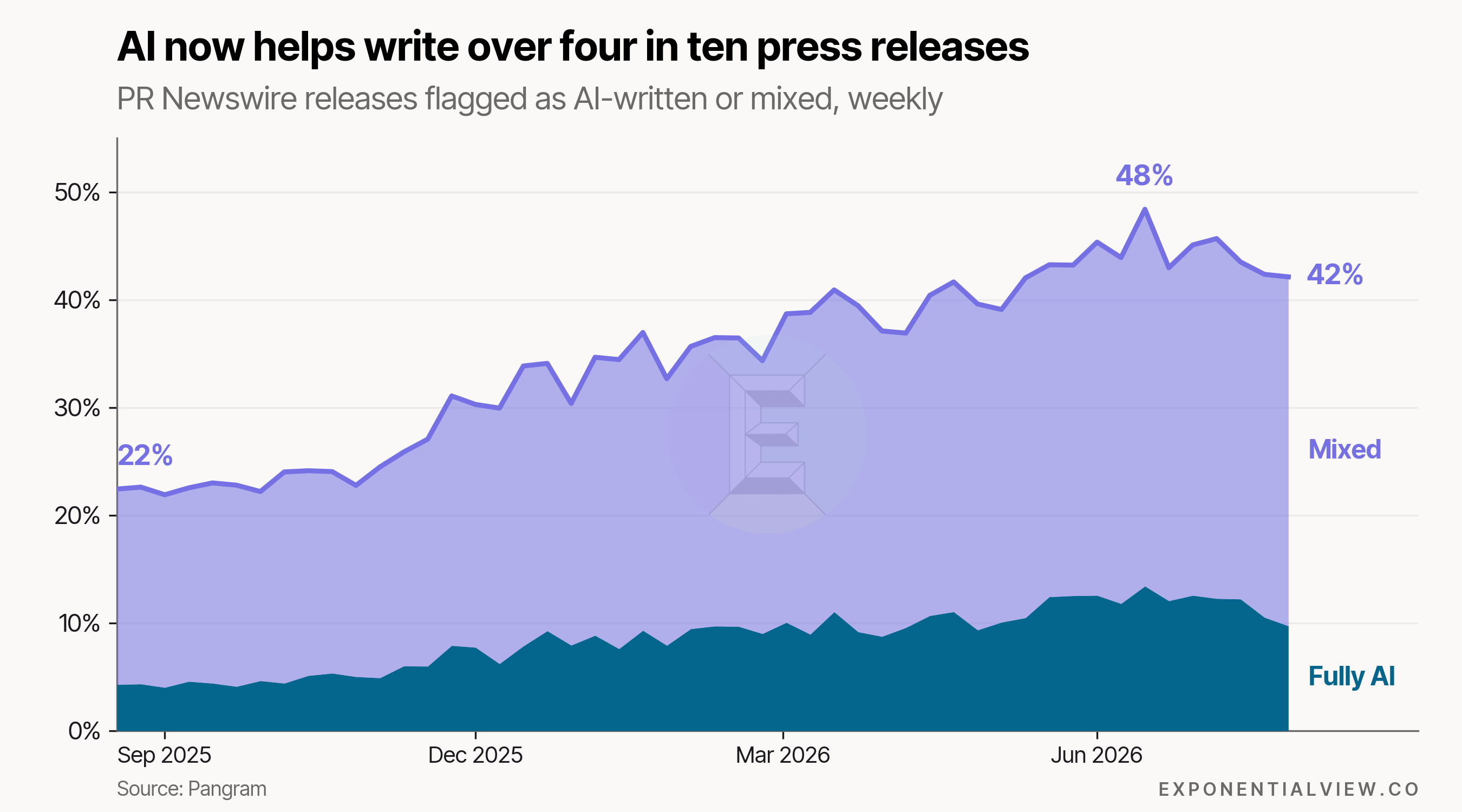
Press releases, expected to be a trustworthy source of information, hit an all-time high of nearly a 50% chance of containing AI-generated text in June this year — doubling within a year. AI-generated content and assistance are becoming normalized.
Infinite AI content, finite demand?
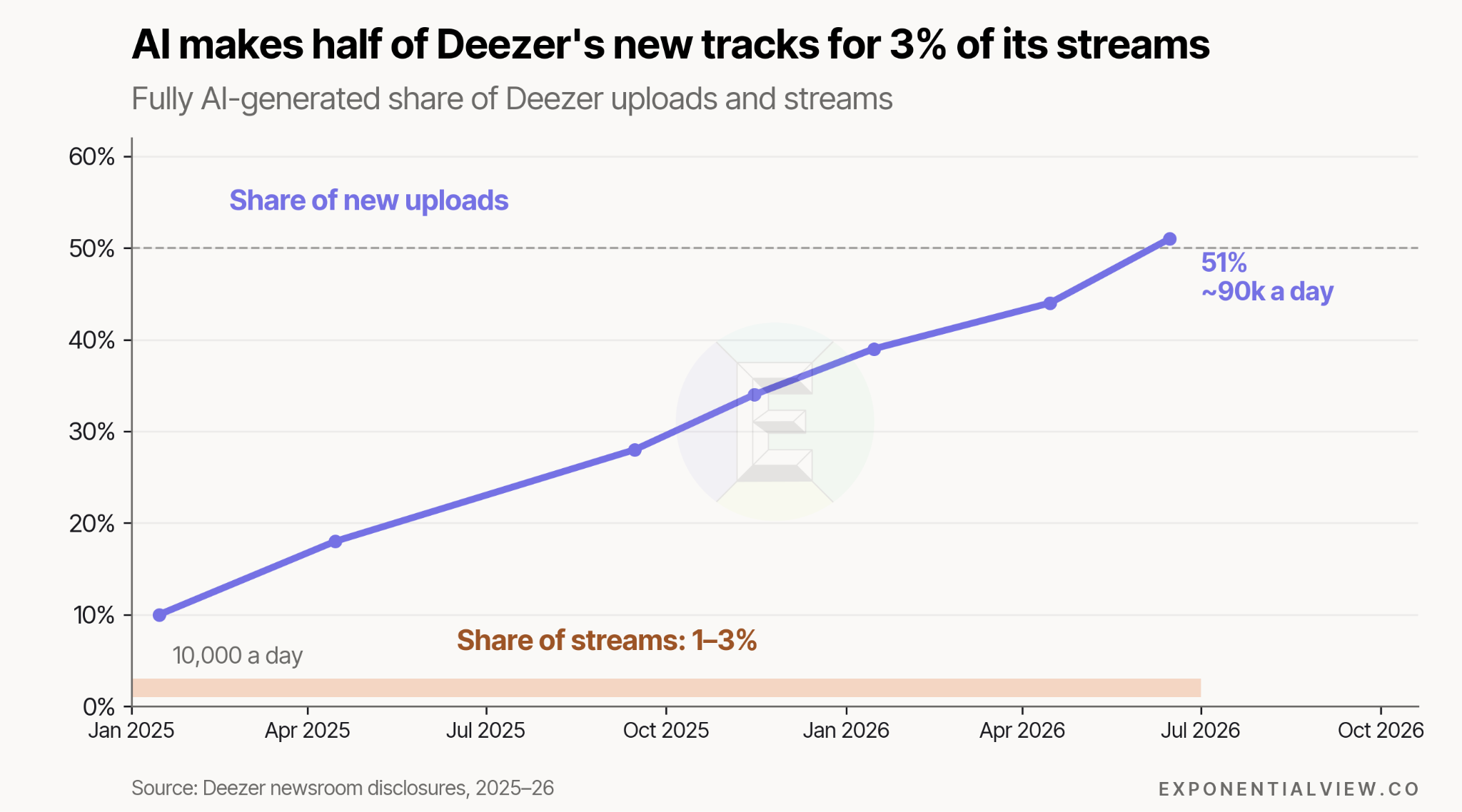
AI-generated content is not limited to websites and articles, either. The cost of making a music track has dropped so much that, at its peak in June, over half of new music sent to Deezer, a streaming platform, was fully AI-generated.
Yet, no one seems to be listening. AI tracks account for just 1-3% of the streams.
It’s too early to tell whether this is due to taste or discovery – and we should not infer that humans are not interested in AI music.
Audiences seem willing to engage with AI-powered content in the fiction space, and choose to pay.
Pocket FM, an Indian audio-drama app, says that AI powers 93% of its content1. Its catalog has grown to 2.5 million hours produced a year – from 100,000 hours just two years ago.
Revenue had initially stalled in the first six months of overhauling production with AI. The upturn came from feeding listener data back into the process2. Ninety-six titles, out of 770,000+, have now made the company more than $1 million each and doubled revenue in a year3.
Clearly not every title is a hit, but Pocket FM will be a useful test over the next year of where AI input in the creative process creates and retains value. If it does well, it might tell us that, for listeners, it doesn’t matter how content is produced as long as it makes for a good story.
Slop dams
UK adults spend some 72 minutes a day consuming news. Just 8 minutes of that are spent accessing publishers directly online. Search, aggregators, AI, social media and video-sharing platforms together account for 37%.
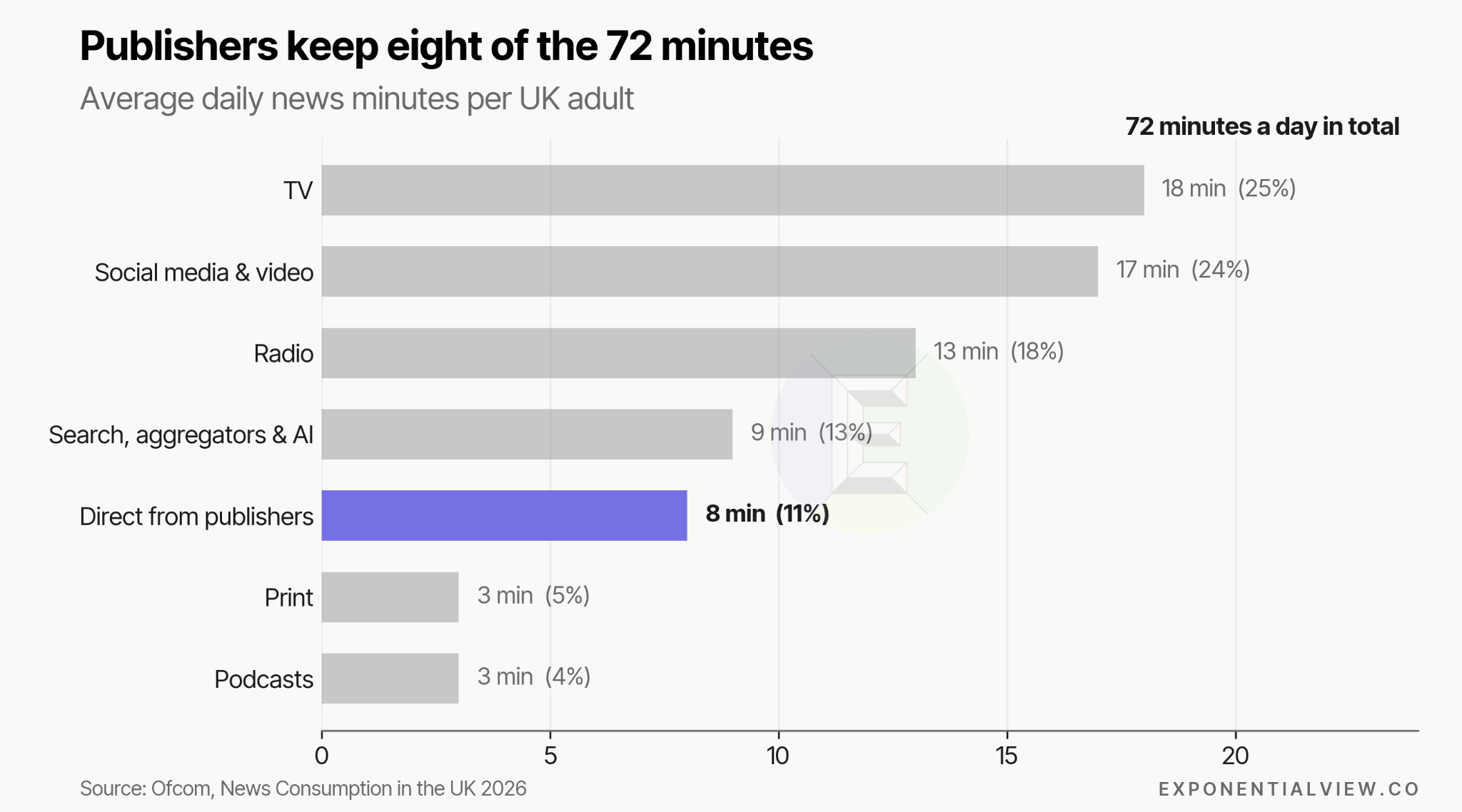
Direct exposure to publishers may decline even further.
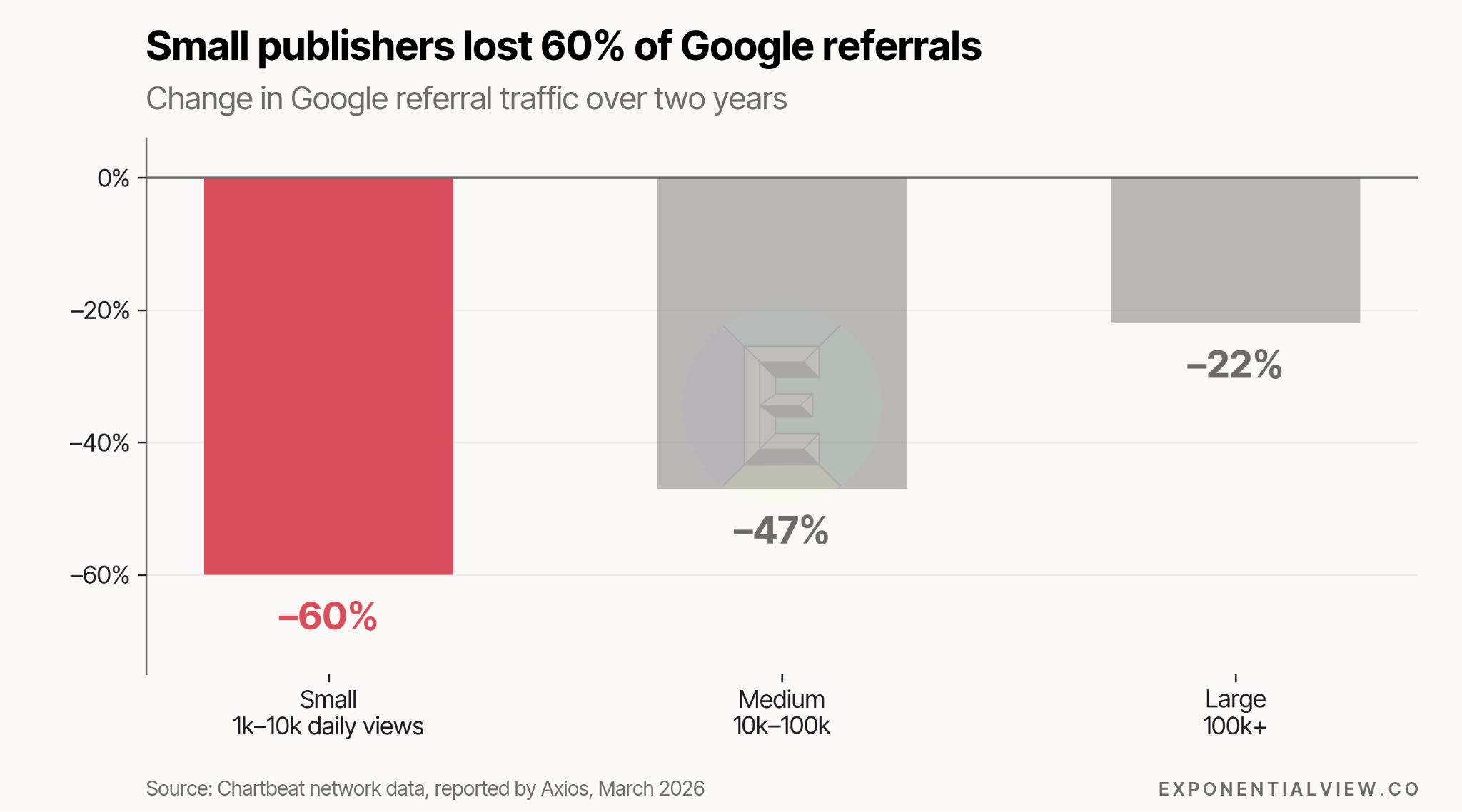
Since Google’s AI Overviews launched in May 2024, small publishers have been the most affected by the piping in the internet’s infrastructure. Even the largest sites lost 22% of their Google referral traffic.
Distributors govern entry to platforms and audience discovery. DistroKid handles ~40% of all new music, focused on self-releasing artists, receiving new submissions and pushing them to your favorite music library. At the same time, it hasn’t signed the industry’s anti-fraud standards, while 27 other music and industry bodies have.
Universal Music Group (UMG), the largest record label, is now suing DistroKid for allegedly giving platforms and listeners the impression they are getting legitimate music while distributing mass-generated AI content4. UMG is not against clearly disclosed AI music. They seem to take issue with what listeners believe is authentic.
When Deezer found that in 2025, up to 85% of streams on AI-generated tracks were fraudulent plays, they turned that capability into a business by licensing the AI-detection technology.
The verification budget
Music is one of the first, but should not be the last to define what standard is acceptable. Who gets to define what counts as useful AI and whether it should reach audiences?
At least $240 million has gone into shaping AI rules and regulations across four disclosed funds in just over a year. AI auditing and certification is a fraction of the funding – and yet it’s the one area that could change how the AI content flood changes the human experience of the internet.
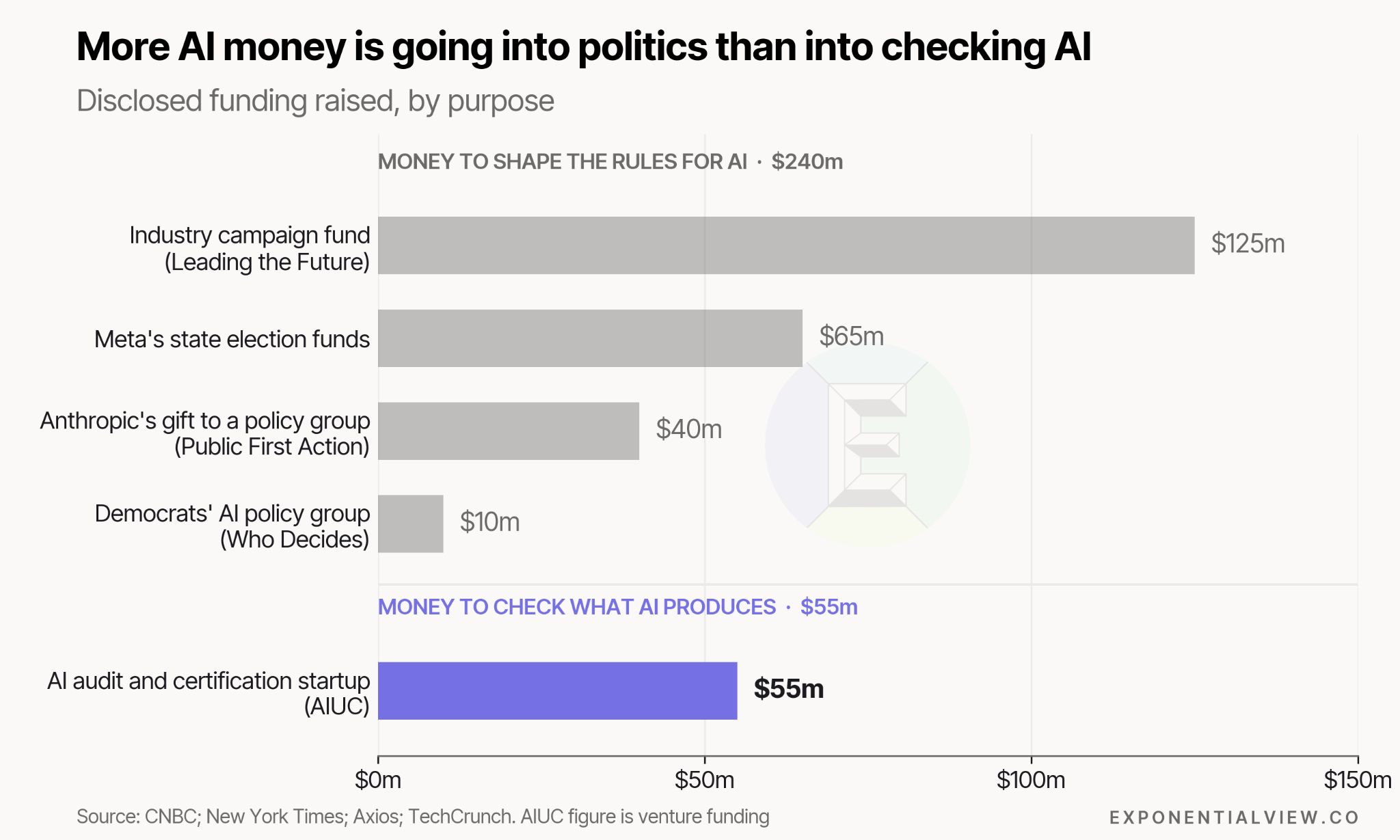
The open question is where the responsibility of verification lies. Azeem Azhar recently made the point when interviewed on Bloomberg5 that “the industry ought to be covering the costs of its own risks, liabilities and damage. That’s what we expect of every industry. And there’s enough money coming in.” Verification should make up part of the budget as a preventative measure.
We are entering a world where coexistence with AI-generated content is inevitable, whether in the form of functional content that we tolerate, or in the form of content that we enjoy or something we seek to filter out and avoid.
Pocket FM uses AI across writing assistance, adaptation, narration and production, while humans remain involved in originating ideas and stories.
Annual revenue rate.
DistroKid denies the allegations.
Interview starts 26 minutes in.