A must-read for asset allocators who are not tech specialists. – SHK, a paying member
A big issue this weekend. Settle in with a cup of coffee.
The handmade’s tale
The year’s biggest launch is a testament to manual labor. Rockstar’s 5,000 staff built Grand Theft Auto VI without generative AI. Reports say that 30,000 unique characters in the game were made by hand. Proof of humanity paid handsomely – the game made $3.79 billion in sales by the end of the first day, including preorders.
Back in 2017, I argued that, in a world of AI, we should look for lessons from artisanal cheesemakers. AI would make perfection cheap, and what would be scarce is human imperfection. We do seem to love the human touch. In one study, people rated AI-generated paintings more favorably when they were labeled human-made.
William Morris and the British Arts and Crafts movement of the 19th century resisted industrial mechanization, only to find that manual labor couldn’t compete on price. In the end, only the well-heeled could afford the premium. He raged that he spent his “life ministering to the swinish luxury of the rich.”
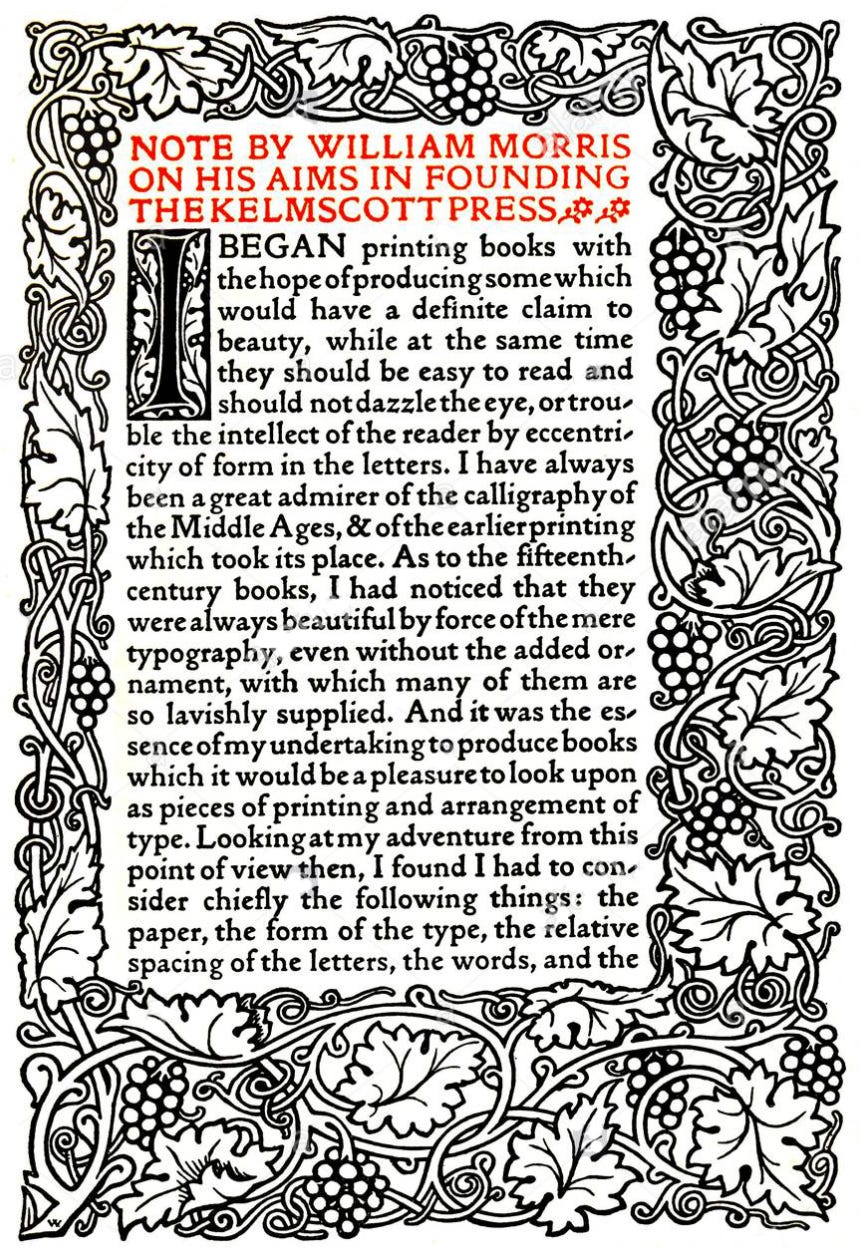
Digital culture might escape the trap that held Morris. Created carefully by hand once, the costs can be spread across millions of buyers, as a mass-market phenomenon, not the plaything of the rich. But the specter of Morris (and the artisanal cheesemakers) still looms over a world flooded by generative content. An ocean of synthetic digital drivel (what my Instagram feed has become) might drown out a scarcer “certified human” tier.
👉 I’d love to hear how you are thinking about this. Leave your thoughts in the comments below.
See also:
The team at Substack profiled my work and how we try to balance human thinking with AI’s capabilities:

Anthropic’s big week
Wall Street got a piece of Anthropic this week. What exactly did it buy?
The Exponential View view. Could Anthropic take a cut of the value its AI creates across the intangible economy? I shared my early analysis of what Anthropic is really listing.
From our AI Investment Brief desk. We model three futures for Anthropic, from licensing models that run on your devices to becoming an AI utility.
Jasmine Sun published a reflection on a year of conversations with people inside Anthropic. The firm has hallmarks of a religion: the only way to save humanity from an existentially dangerous technology is to race as fast as possible to build it first, and they are the only ones virtuous enough to wield that power.
Twin primes
You wait 167 years for a proof of the Riemann hypothesis, and then two come in the same day. Levent Alpöge, a mathematician at Anthropic, says he and Claude may have proved the Riemann hypothesis. That same day, Stanford mathematician Ravi Vakil rushed out a proof of the same conjecture by Alessandro Masullo: “all human, with no AI.”
I’ve not read either proof. Alpöge says his runs to 17.4m lines of Lean, a formal language used to prove logical arguments. Masullo’s proof was still being checked by a third party, but a team is now translating his argument into Lean, where it can be verified more quickly.
Scott Aaronson makes the case that no AI result that has been verified in Lean has ever been retracted. But it’s also a sign of the times that the human team wants to lean on Lean to prove Masullo’s work.
See also: Why the Riemann hypothesis is so important. (Lovely video.)
Wright of way
More than 2,000 gigawatts of new power plants and batteries are waiting to connect to the US grid. For perspective, that’s more than every power plant running in the country right now. About 85% of the queue is for solar, wind, and storage.
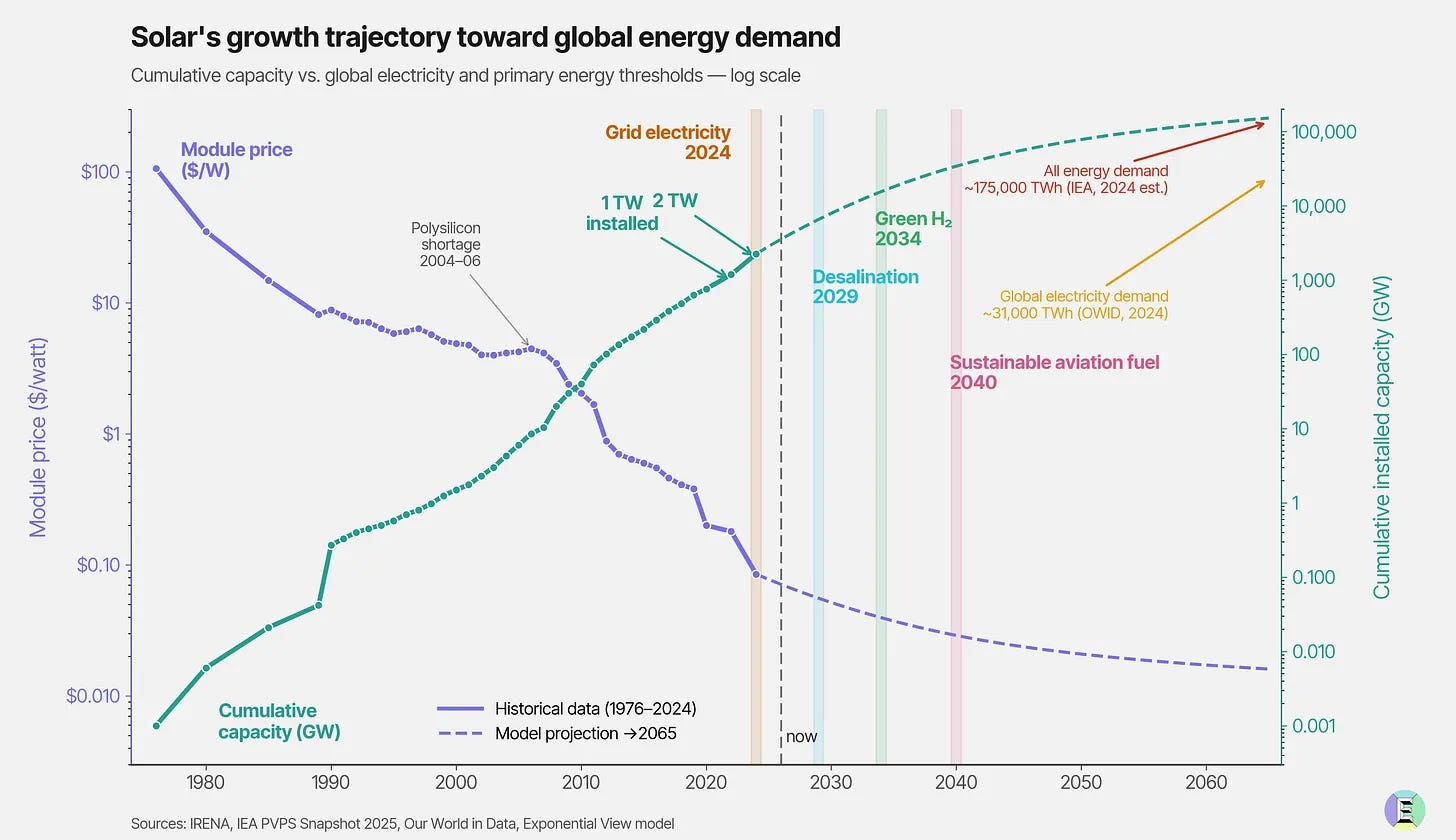
Meanwhile, solar modules keep getting 24% cheaper with every doubling of capacity — we have long believed this will open new markets that were previously unavailable (see our solar supercycle model). Well, since Wright’s law continues to deliver, the queue is pushing AI off the grid.
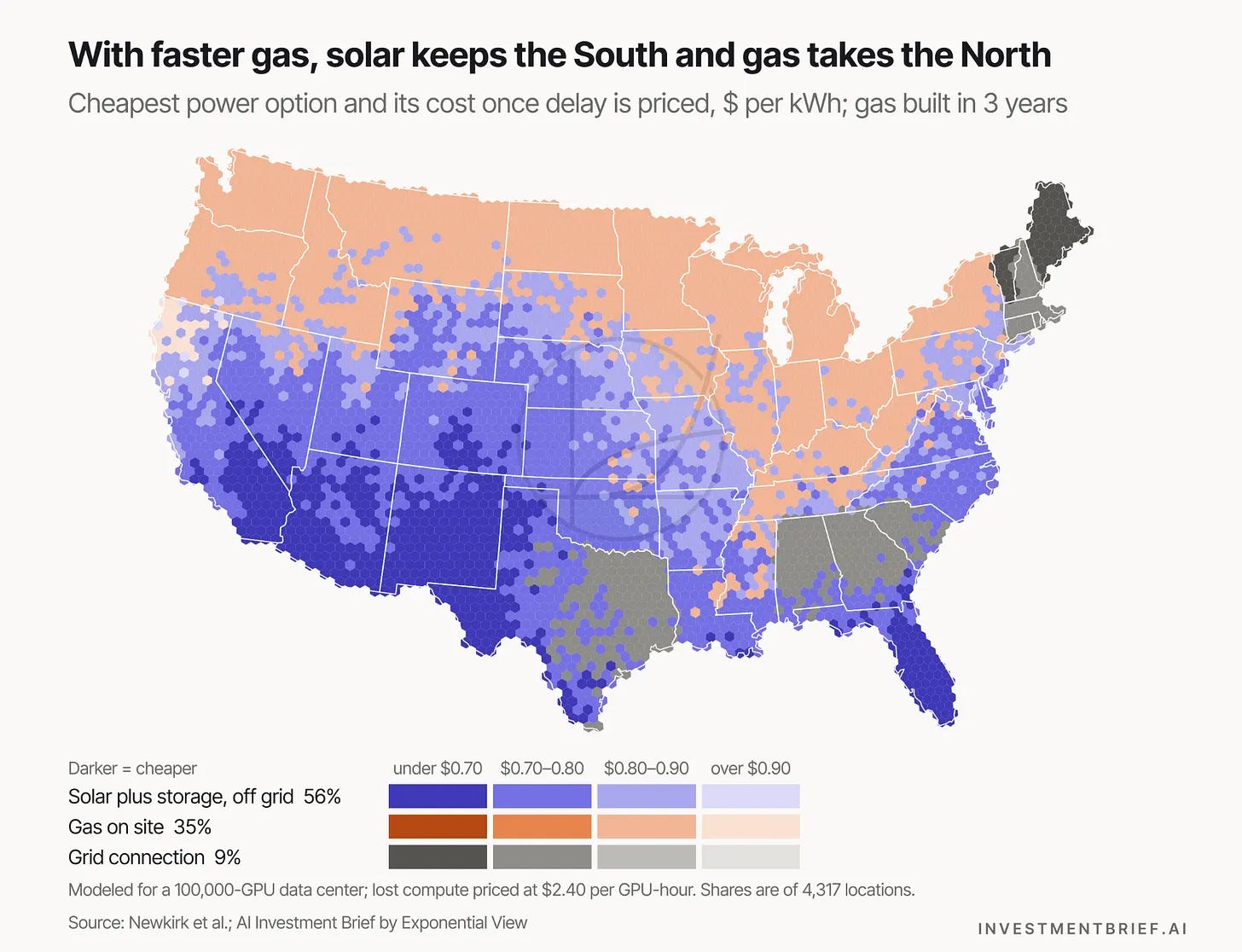
While an AI chip rents for about $3 an hour, a month spent waiting for power costs more than the power itself. In Friday’s edition, our Investment Brief showed how on-site solar and batteries are the cheapest option to power data centers in half of the United States.