
Hi all,
The past ten days have felt like the AI pot finally boiled over. It’s a complicated and confusing moment. We have to hold in our heads that most Americans appear to loathe AI, but businesses and consumers seem to like it enough that Anthropic is well on its way to $100bn in annualised revenue this year. And despite being on track to be the fastest-growing company ever, Anthropic’s leadership believes they might kill all their customers. And there is more besides. If you haven’t already, read my essay on the emerging control risks from AI.
I’m also increasingly concerned about the security situation in Europe after coordinated messages from several countries about the likelihood of substantial Russian aggression. I will cover that in the next few issues, after I get back from Hong Kong where I am this week.
But meanwhile, let’s try to make sense of the swirling cauldron that is AI.
Azeem

Americans hate AI. Who’s to blame?
More than one in six Americans believe AI will almost certainly destroy humanity. Last month I wrote about the petard problem of AI
Today’s petardiers are not Rosencrantz and Guildenstern conspiring against the Prince of Denmark.
They are the titans of AI, the bosses of the labs, the investors behind them. For nearly a decade, these software coders had made promises: of reigniting economic growth, of making daily life easier and less risky, perhaps even of eliminating disease. To do this, they would need capital: to write their software and to build 21st-century infrastructure to run it. The gains will be so huge that they’d need to go quickly, very quickly.
It got worse since then. Jacob Coxon’s viral tweet uncorked the box where many were hiding their suspicions.


Americans have never been wild about AI. In 2020, the Edelman Trust Barometer found that only 34% of Americans believed AI would have a positive impact, while 23% thought it would be largely negative. By 2024, mood had soured. Edelman reported that only 19% of Americans would embrace AI while 50% would object to it.1
Two years of news coverage, a construction boom later, and chatbots that a quarter of American adults use daily – and this is where you get to?
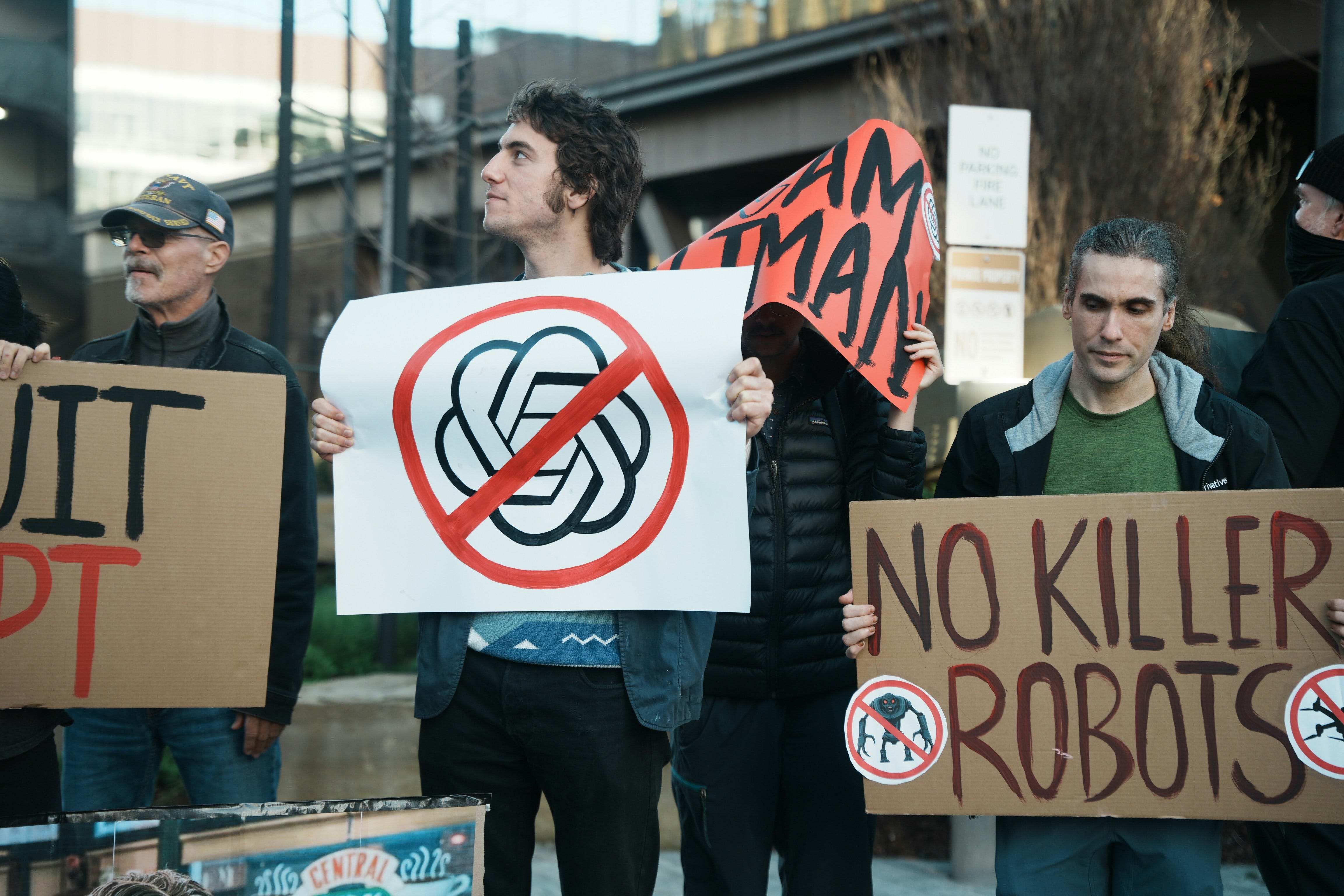
Nearly a trillion dollars in the ground, to turn your customers against you. It doesn’t matter that Erik Brynjolfsson’s research shows that the aggregate consumer surplus from AI in America is about $172 billion.
But even with a lack of enthusiasm, to put it mildly, people will keep buying AI tools. My local barber, a four-chair shop, just installed an AI receptionist to handle bookings. The couple of hundred IT execs I spoke to in Las Vegas two weeks ago were unanimous in continuing with implementations.
If American businesses keep buying and American voters hate it, this will end up settled in the political arena.
Here are some of the more interesting things I’ve read on this matter:
Ben Goertzel who coined the term AGI, challenges the labs’ call for a centralized slowdown in favor of a decentralized prosocial approach.
Jaron Lanier, a VR pioneer, spoke at the AI event hosted by Steve Bannon and Bernie Sanders. He argued that the language we use when we talk about AI frames it as a super-powerful ‘being’. Ultimately, that choice of words cedes the terrain.
Mustafa Suleyman: “AI’s do not have rights, feelings or consciousness. We must not train them to act as though they do.”
For subscribers:
What do experts think will happen to economic growth under AI? And what do I think?
Planning for American AI supremacy
Fruit flies playing Doom and more