
“It is a lot to cope with the rollercoaster of the last decade and deep uncertainty of what’s coming next. Over many years, the quality and depth of the newsletter has ensured I am better informed and inspired.” — Hugh K., a paying member
AI adopter’s decision trap
We modeled three types of companies adopting AI. They have the same starting economics, the same 5% hit rate, but different learning practices. Two years into their investment, all three are losing similar amounts of money. In year five, the eventual loser looks best. It takes eight years to see which approach leads to outsized ROI.
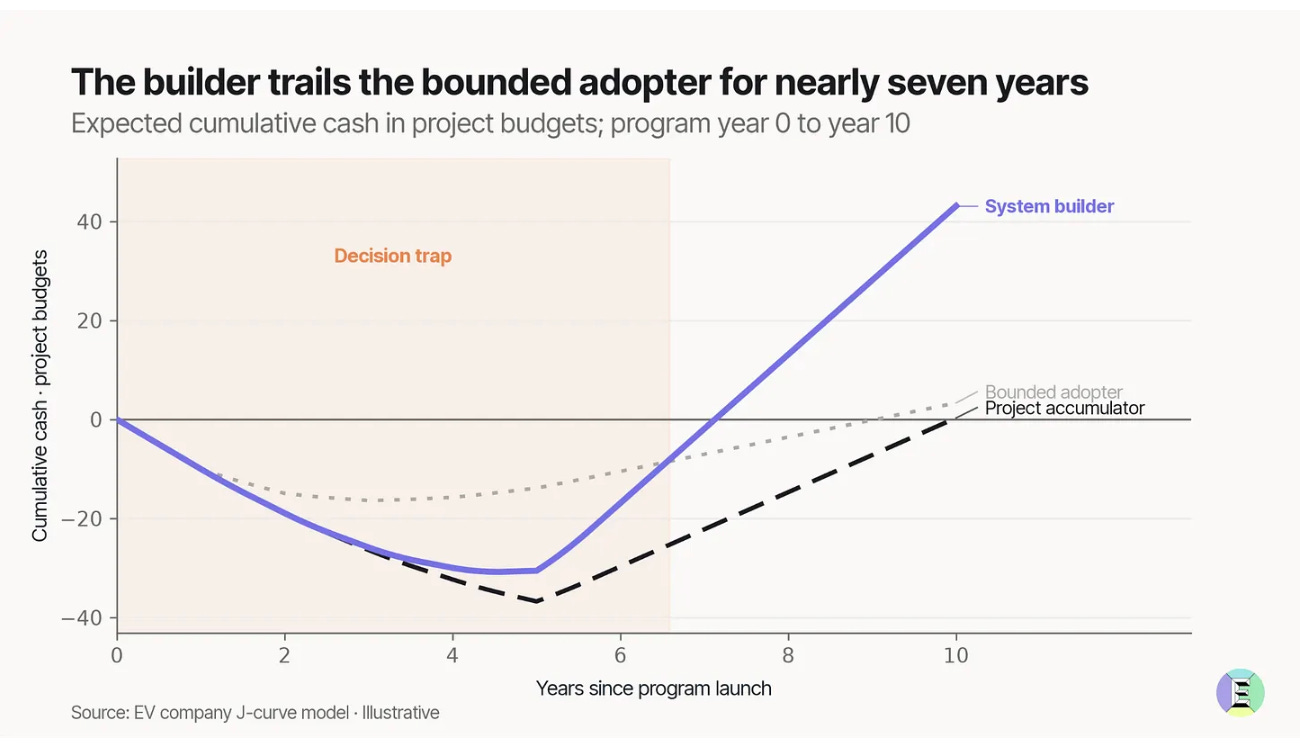
Most CEOs are facing the decision trap right now – you likely don’t know if your firm’s spending is learning that will compound to ROI, or waste. The FT calls Zuck “the king of the side quest” as he works away on a portfolio of bets:
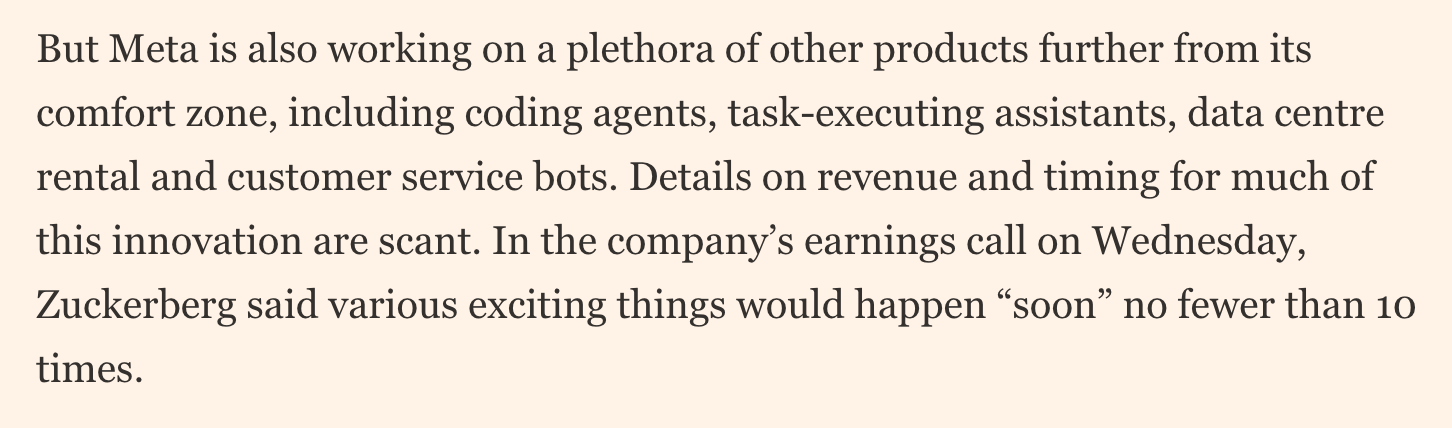

Mark doesn’t need each project to succeed, as long as the experiments deepen Meta’s infrastructure and inform the next move. In our model, system builders that consistently compound their learnings over time have the winning formula. See our framework and the interactive model:

Too brittle to go exponential
A $45 billion fund at its peak, started by an AI researcher with no hedge fund experience, betting on the AGI capex build-out at roughly four times leverage, was forced to liquidate this week. Leopold Aschenbrenner started Situational Awareness LP in late 2024 on a thesis that the path to superintelligence would put trillions into compute, chips and power.
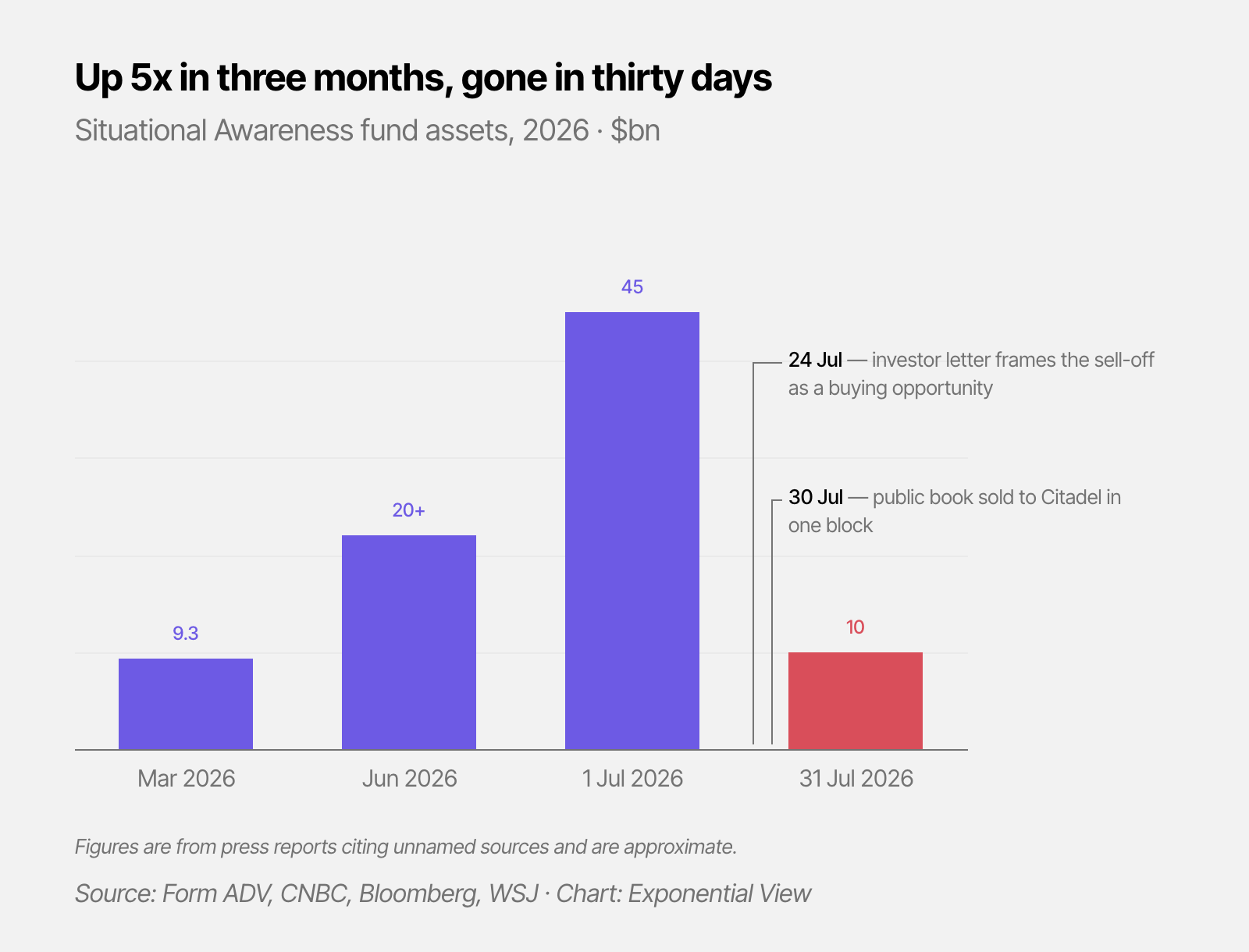
He did great. And then, the trade turned. The Philadelphia Semiconductor Index fell 28.6% from its June peak, and software gained.
Situational Awareness’ unraveling is not proof that Leopold’s thesis is wrong.