
Hi,
Om Malik died on Wednesday. He was one of tech’s truest voices, as a journalist, a founder, an investor, a questioner and a photographer. He understood, before most, that technology is a human endeavor, not just an engineering one. Over the past 15 years, I’d seek him out regularly on my trips to the Bay Area.
He will be greatly missed.
Azeem
The state of the AI economy
We published The State of the AI Economy report this week. It’s the first research report we know of to dissect the demand side of the AI economy, which is critical for understanding where AI is heading.
I’ve been in this research for months, and after all that time, one chart still stands out to me. It’s the chart that shows the break in the 50-year compute growth trend.
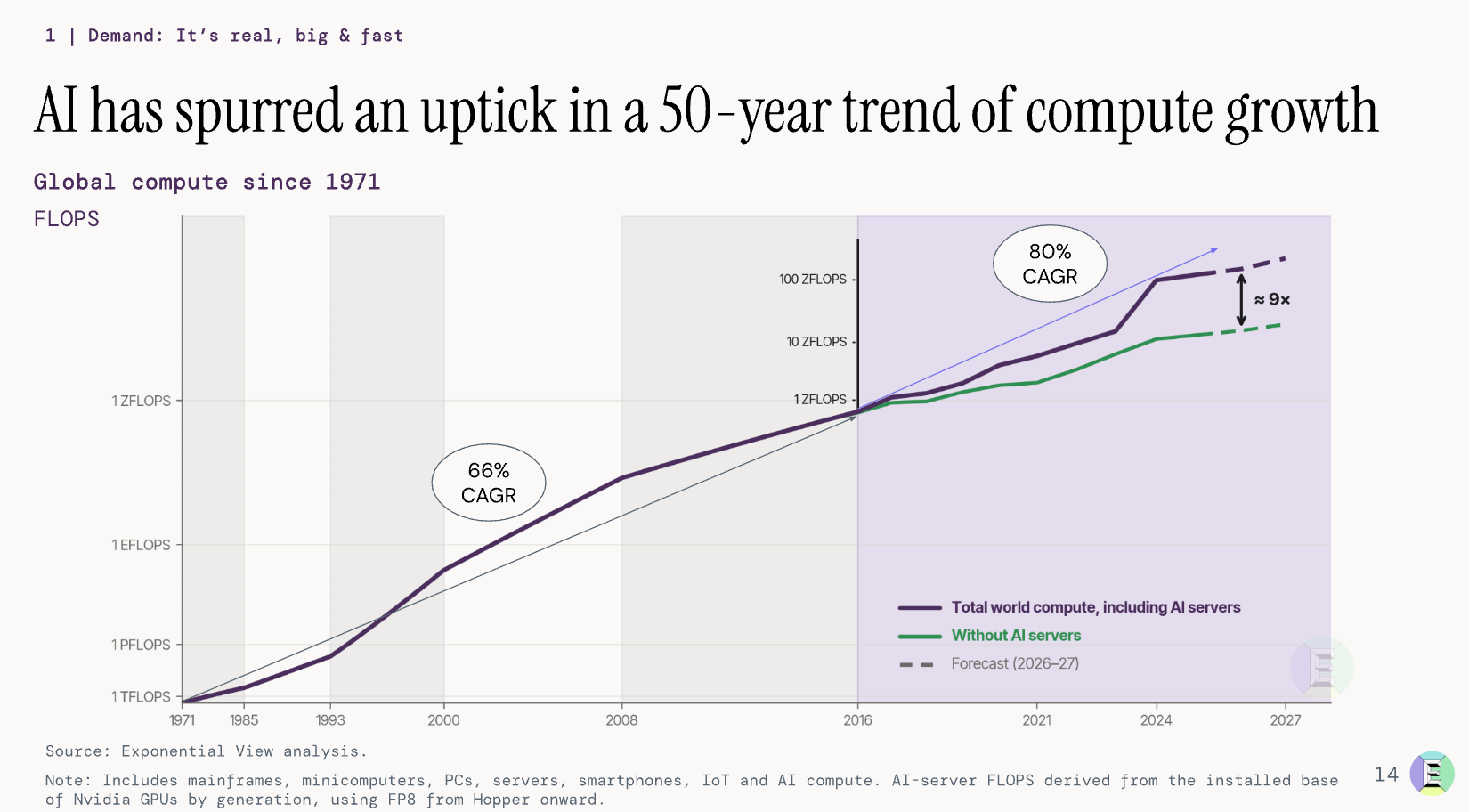
So, what’s so special about it… I’ve been tracking the global stock of compute for the past five years. This has involved building a model of the total number of computers of all types (mainframes, minicomputers, PCs, laptops, servers, phones, IoT devices) in the world and making reasonable, bounded estimates of compute horsepower. Up until 2023, the trend line was pretty clear: roughly 66% compounded growth in global compute stock, even across major platform shifts, from minicomputers to PCs and from PCs to phones.
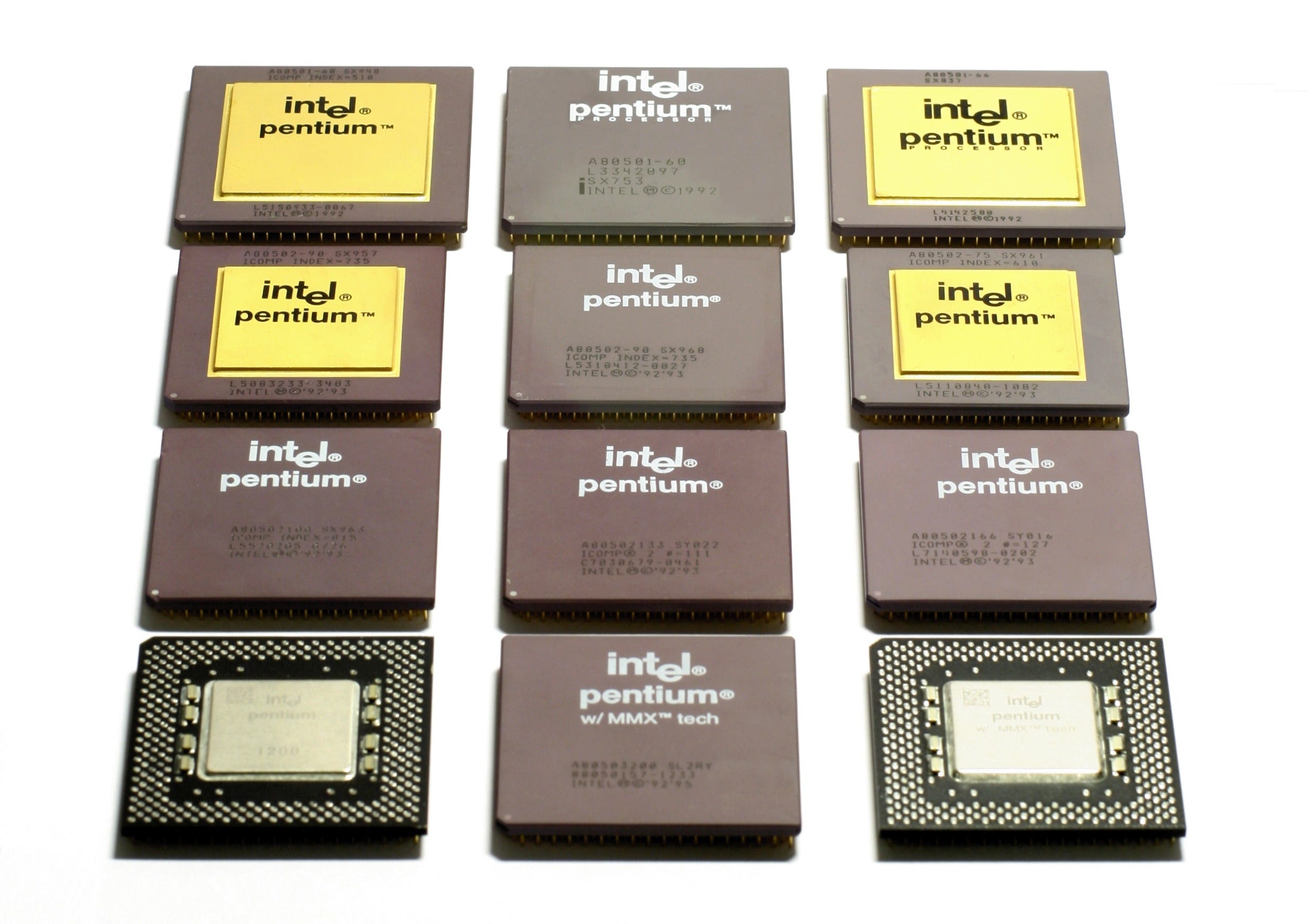
Trends with a five-decade history have momentum, so to break this trend requires something special. The last time this happened was back in the mid-1990s, as businesses around the world inched past Solow’s paradox1, then accelerated by a growing consumerism of computing via Windows 95 and the Internet. Technology helped; the Intel Pentium had substantially better floating-point capabilities than earlier x86 chips. It arrived on the scene in 1993 – out of reach for my student budget.
The trend line reverts back to the mean around 2006. Dennard scaling2 broke: chip makers had to move to multi-core architectures, which don’t give a smooth scaling of FLOP capacity.
At the same time, the PC market had matured, and the development of mobile computing exploded in volume, but mobile processors are optimized for their physical constraints, rather than processing power. Cloud computing has centralized a lot of operations; it also emphasizes efficiency over raw power, and the shift from owned-and-operated servers meant higher compute utilization over a (relatively) lower base than otherwise.
Which brings us to the shift starting in 2020 as AI accelerators begin to make their mark.
Today’s AI runs on compute – floating point operations (FLOP) – as its central input. And we’re bringing more FLOP-factories online. Will this trend also revert to the long-term mean, just as the PC wave did? My guess is that this current pace would be sustained for a few years, perhaps even a decade or more, before reverting back to the long-term trend line.
See also:
We are all managers now
Last week, we wrote that AI-native firms are flatter and have fewer managers than non-AI-natives. While this is true, for the sake of precision, we should say fewer managers of humans. With AI, every frontier employee becomes a manager of agentic teams.