
Would you go to your gym if you had to pay for every visit? Probably not. We generally prefer those bundled memberships, even if we never hit the leg press after January.
AI companies have, until recently, been a lot like gym owners, offering generous bundles. And most AI users have been like gym-goers, occasional, sometimes frequent users. But others have been voracious and incessant, churning through their Claude and ChatGPT subscriptions.
And now, the AI labs have changed their tune, introducing more usage caps and metered pricing, particularly for coding tools.
So does moving from bundled pricing to metered pricing expand or shrink markets?
It depends.
Bundles expand markets when marginal costs are low and when customers get a diverse set of benefits from the bundle. A gym membership is a good example: it doesn’t matter whether the gym-goer visits twice a month or 10 times a month; it costs the same for the fitness company to serve. At the margin, if everyone went all the time, the model might break due to congestion and increased cleaning and maintenance costs.
However, if a product has variable costs, a pricing bundle is really a decision about who bears the risk of over- or under-use. If the bundle favours the buyer, the buyer has no incentive not to max it out. Few of us can spend more than 20 or 30 hours a week in a gym, but many of us can run riot with AI coding models. And AI models do run up substantial variable costs for those peddling them.
Chatbot usage is all over the map. Sarah Friar, OpenAI’s finance chief, noted that ChatGPT Pro users hit the app 11 times more frequently than active free users. That 11x is wide enough. But consider what happens with agents. If I am hunting-and-pecking in a chatbot, I’ll struggle to consume 100,000 tokens a day. R Mini Arnold, my agent, won’t get out of its SSD for less than 100,000,000 tokens a day. I spotted one user racking up 130 billion tokens in a month.
Moving from bundles to usage-based pricing brings with it sticker shock. But it is manageable. Consider Uber. The taxi company has put an AI cap on its 5,000 developers. Today, they are limited to $1,500 per month or $18,000 dollars per year per agentic coding tool. Like Oliver Twist, developers can ask for more. If all 5,000 developers spent the full $18,000 a year, the bill would be $90m. Against Uber’s 2025 free cash flow of $9.8bn, that is less than 1%. It’s essentially immaterial; a good CFO can deal with it in a heartbeat. And Uber is likely to be a heavier spender than most of Main Street. The pricing debate isn’t really about affordability.
It’s really about whether the customer can connect spend to value.
Back to the future
Fortunately, we have a good precedent that can help us think this through. In the early days of Internet advertising, going back to AT&T’s banner advert on Hotwired in 1994, advertising was sold on a cost-per-mille basis. The advertiser paid for a bundle of impressions. Perhaps users clicked, perhaps they didn’t.
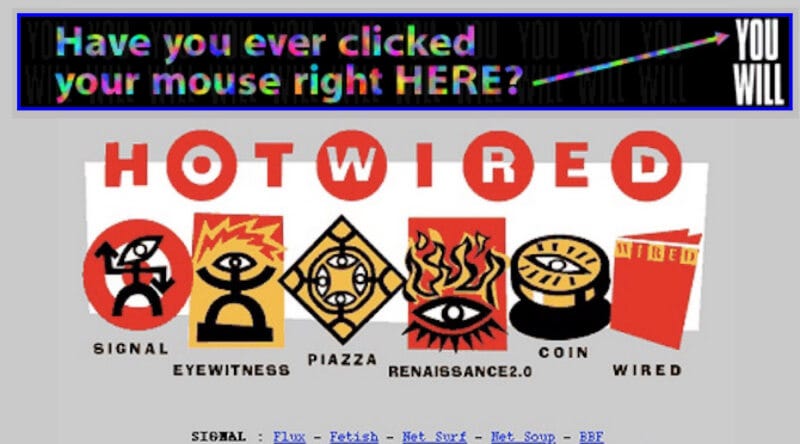
Today, Internet advertising has moved to a metered model. Customers don’t buy a bundle of impressions; they buy a metered outcome.
The question is: what happened to ad pricing as we moved to the metered models? And what happened to the size and profitability of that market?
Of course, you know the answer, but it is worth seeing the pattern. When pay-per-view was introduced, it helped grow that market and is now vastly preferred.
