For the research and modeling behind this analysis, see our 2026 State of the AI Economy Report.
Based on current guidance, the seven largest AI-infrastructure builders1 expect capital expenditure of $863 billion in 2026 – 88% more than last year. We estimate that roughly two-thirds, some $550 billion, will be AI-related.
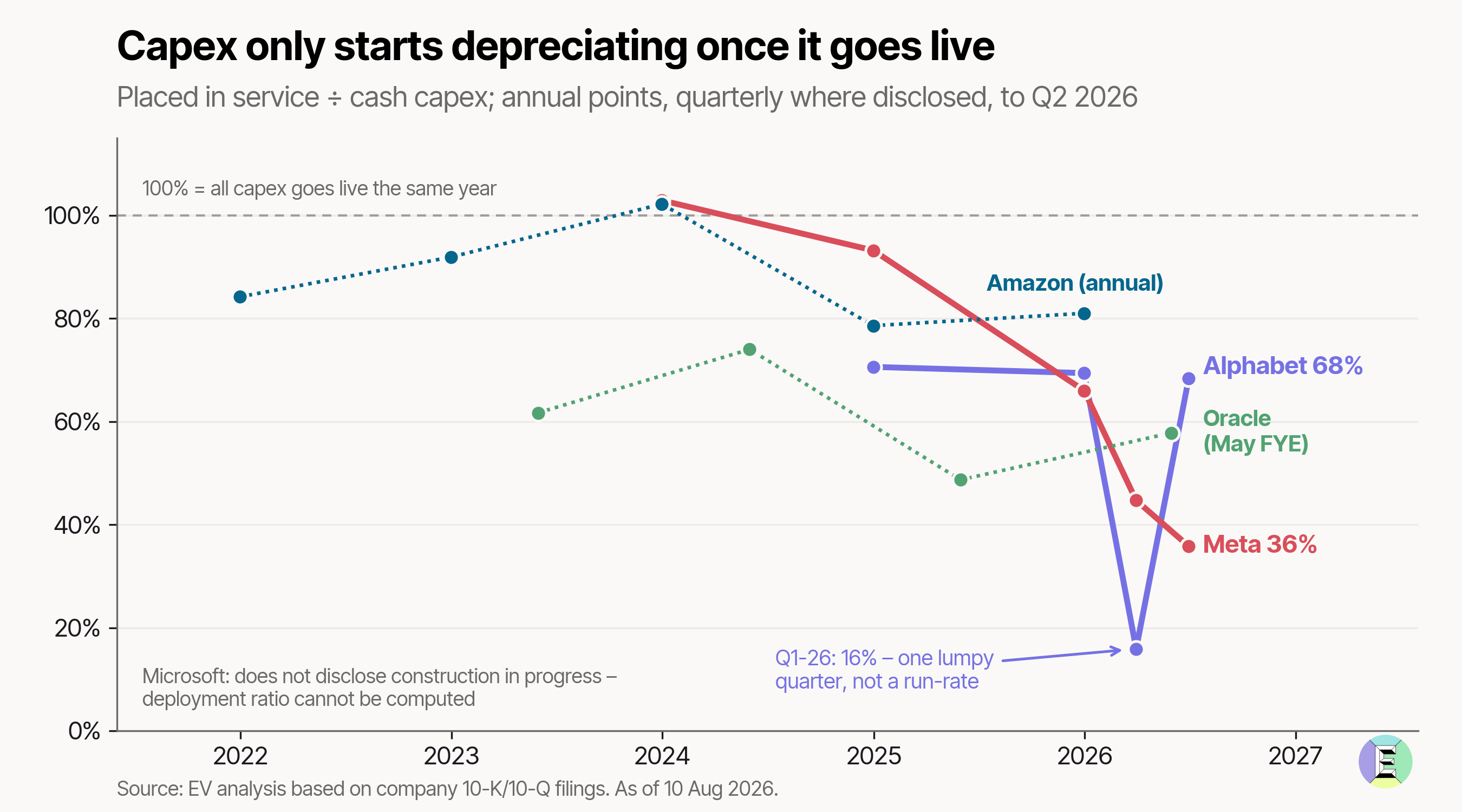
That investment does not begin affecting earnings through depreciation as soon as a project starts. While infrastructure is being built or assembled, the attributable costs are capitalized on the balance sheet as construction in progress. Depreciation begins only when the assets are ready for their intended use.
Across the four hyperscalers that disclose this balance2, assets not yet in service now total $315 billion3, up from $281 billion one quarter earlier. This represents both capacity still to come online and a reservoir of future depreciation that has not yet reached the income statement.
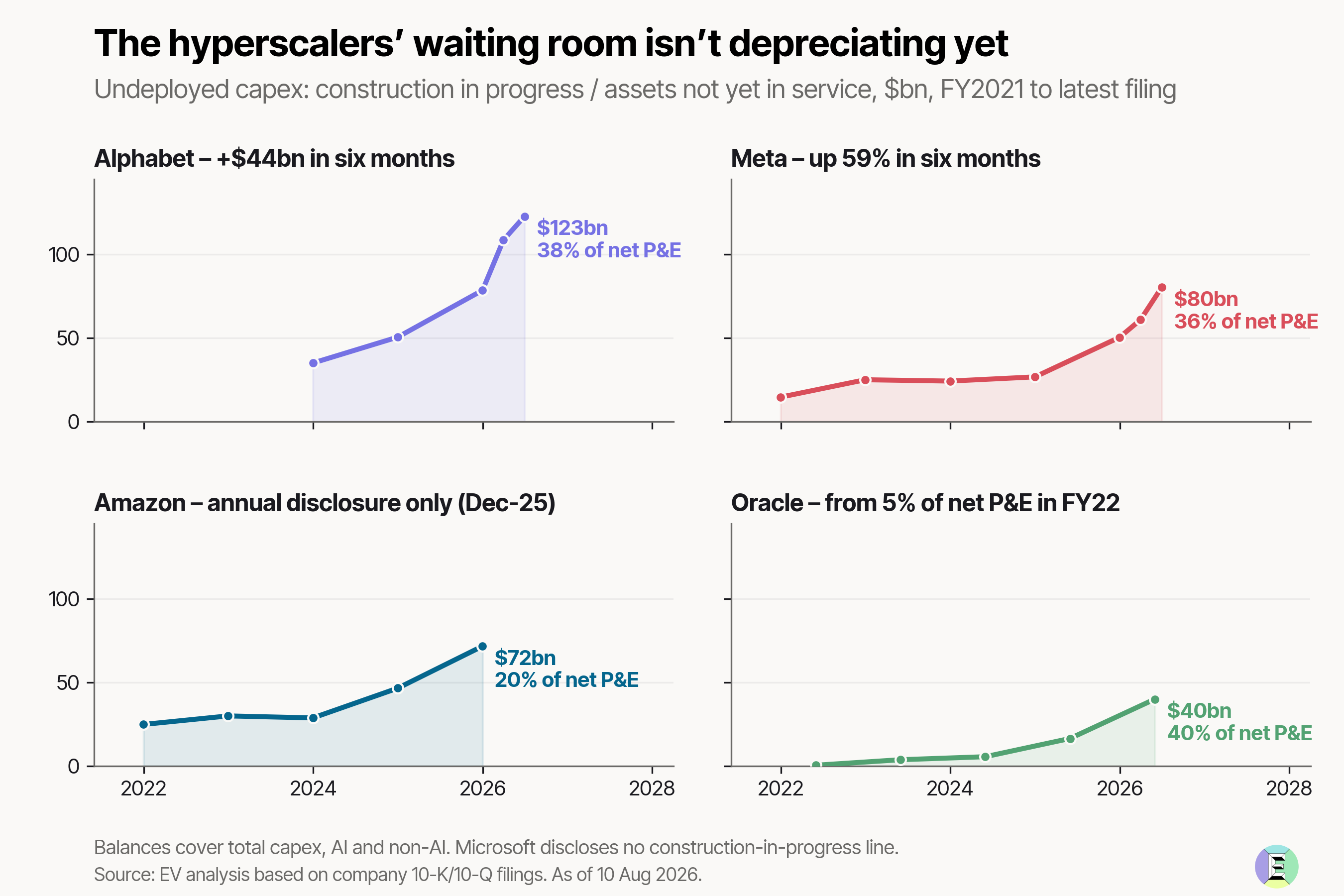
A dollar of capex spent by Meta now waits some 1.7 years before going live, a year more than in FY2024. So, for every dollar it spends today, only about a third will reach service within the year. Others have seen a similar trend, to a smaller extent.